
SIGN UP
FOR ROUTE 66 UPDATES, NEWS AND EVENTS BY EMAIL
Visit Albuquerque prohibits users from downloading images from our website.
Please use our media library for downloadable images and usage rights.
Stop and admire the lights of Albuquerque like the King of Rock ’n’ Roll did in his pink Cadillac. This sandy dune is called Nine Mile Hill for its distance from Old Town Albuquerque. For years, neighborhood kids would race up and down the stretch in souped-up automobiles and motorcycles. Today, this hill on the western limit of the city is home to the Route 66 Visitor Center.
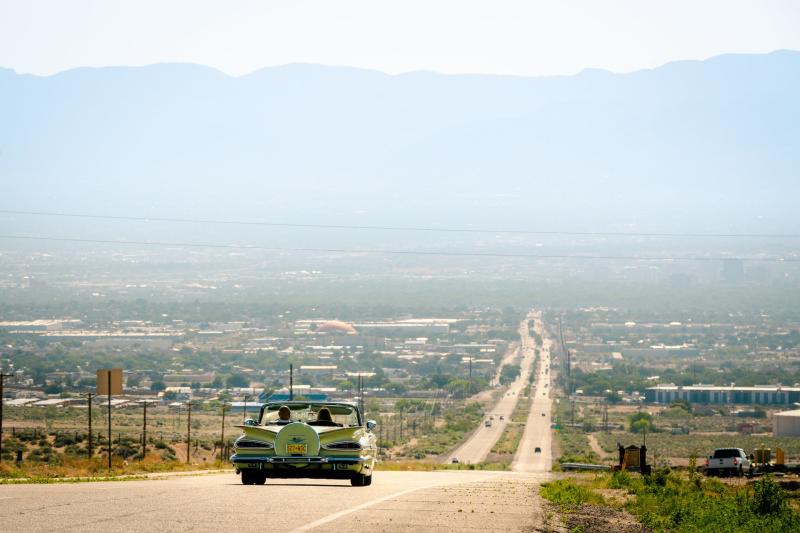
Photo courtesy of New Mexico Tourism Department.
No matter the time of day, this panoramic vista of the Sandia Mountains and the city below will take your breath away.
Built in the 1990s, the West Central Route 66 Gateway welcomes travelers driving from the west and bids farewell to those leaving Albuquerque. Geometric patterns that pay homage to traditional Native American designs are formed by vibrant neon lining the rust-toned arch.
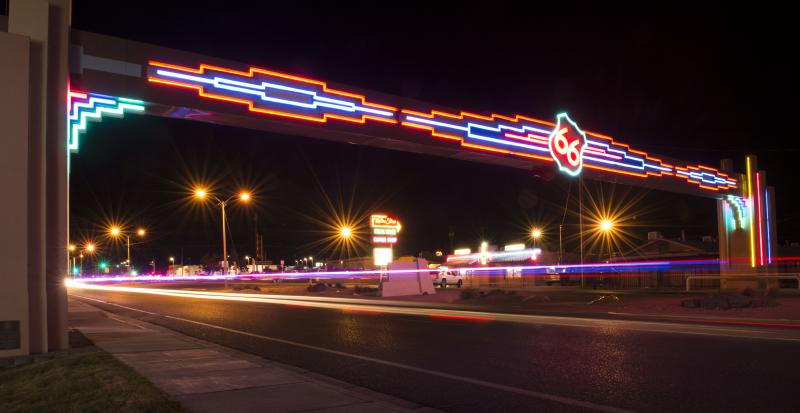
Parking is available on the side streets, 64th and 65th. Use the crosswalk signals and don’t stand in the street while traffic is moving – please stay on the sidewalk.
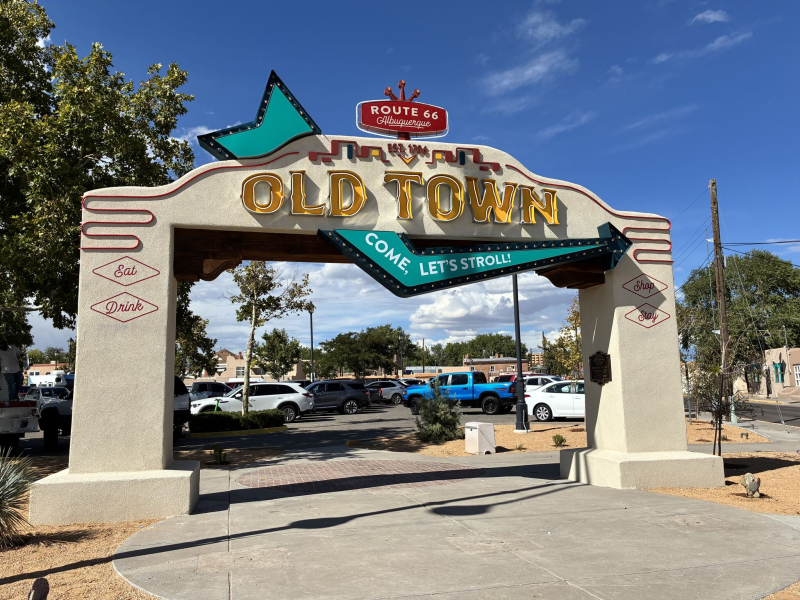
An adobe archway has been located on the corner of Route 66 and San Felipe Street for decades, welcoming visitors to Old Town. In 2025, it received a kitsch-inflected retro refresh. Equipped with neon tubing, the new Old Town Route 66 Arch honors Old Town Albuquerque’s history as one of the route’s oldest communities.
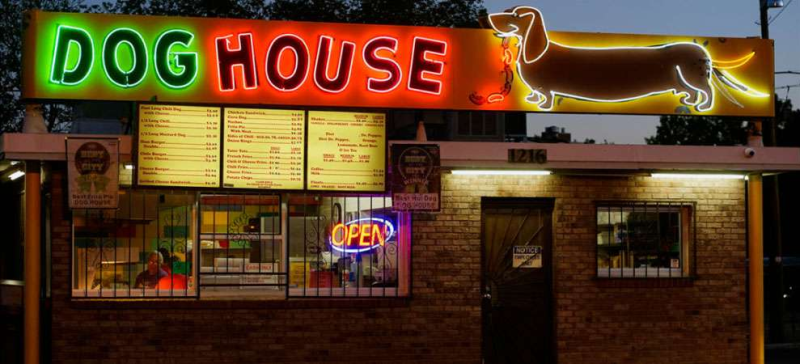
This neon sign will get your tail wagging. Built in 1945, then moved to its current location on Route 66 in 1948, the Dog House is a local favorite. Satisfy your cravings with carhop service or inside the retro diner. Cameo alert — The Dog House also has a screen credit in AMC’s “Breaking Bad.”
This 1927-built Pueblo Deco picture palace is truly one of a kind. Fusing Art Deco with Southwestern Native American motifs, this theater is the crown jewel of downtown Albuquerque. The neon sign is a 2011 recreation of the original, which was removed in the 1970s.
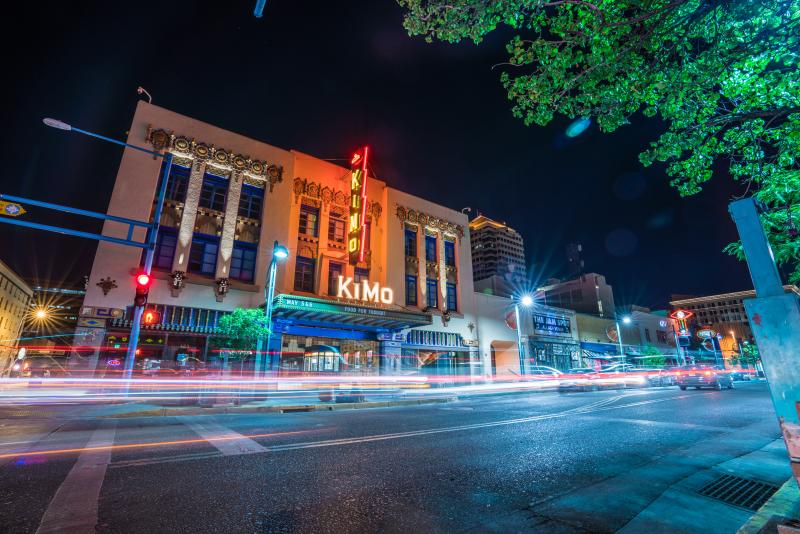
Photo courtesy of Dirt Road Travels.
This bubblegum-pink sign in vibrant Barelas once marked the B. Ruppe Drugstore, operating in Albuquerque since 1883. In its later years, it served as a yerberia, or herbalist’s shop, courtesy of local healer Doña Maclovia Zamora. You can see Zamora’s likeness across the building’s north-facing wall, painted by local artist Nani Chacon. Today, a holistic wellness spa operates inside the Ruppe’s historic walls, continuing its healing legacy.
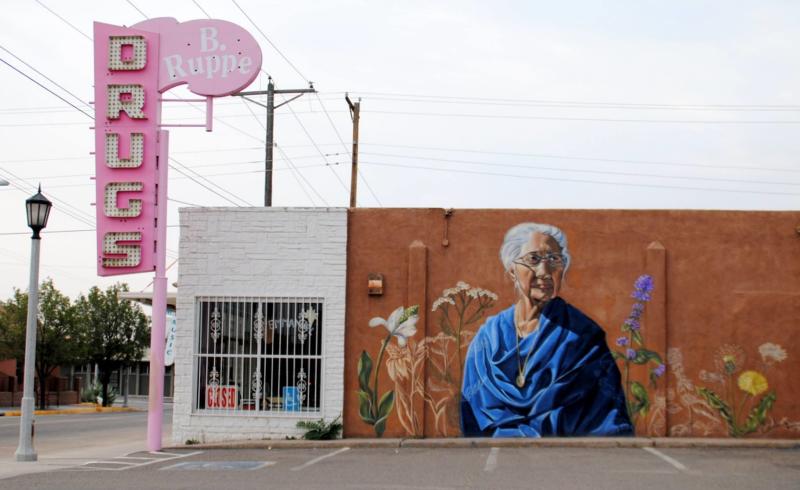
Photo courtesy of Barelas Main Street.
Yield for fans of the Vince Gilligan universe! AMC’s “Better Call Saul” featured this sign several times. It is also an outstanding example of Googie Midcentury signage on the pre-1937 Route 66 alignment. The sign was erected with the opening of the Dining Room in 1950, marking El Camino Dining Room as a legacy family-owned restaurant in the Duke City.
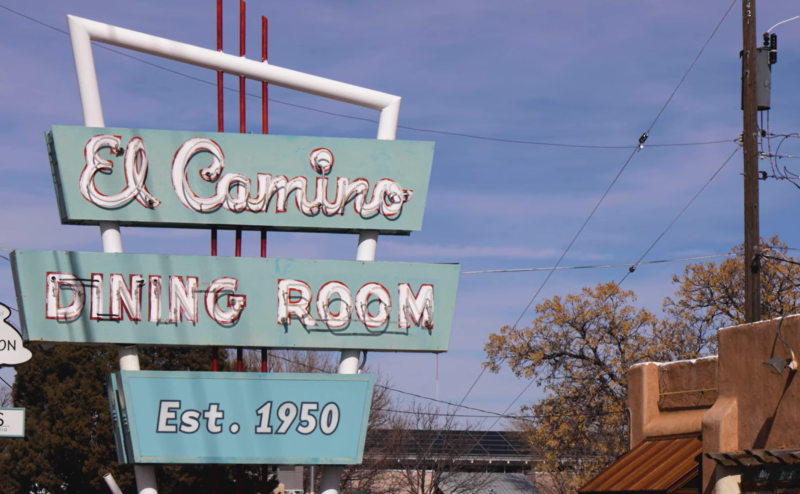
Image courtesy of New Mexico Tourism Department.
This unique police substation is not just fashioned to look like a retro diner — it is a true Valentine Diner. The eight-stool restaurant once stood at Eighth Street and Central Avenue downtown. It opened in 1942 as the Little House Cafe.
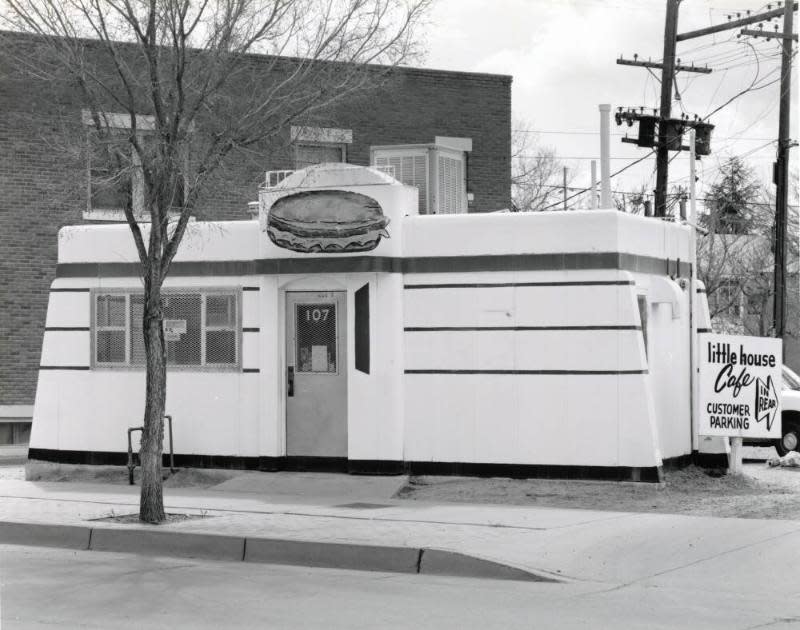
The Little House Cafe [107 Eighth St], 1992, gelatin silver print. Albuquerque Museum, PA2024.007.009.B.
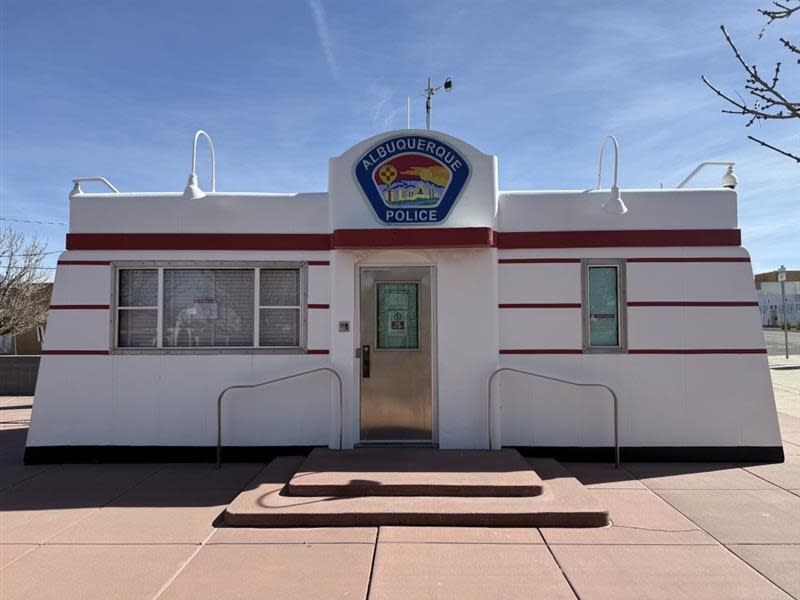
The Little House Cafe today.
Valentine Diner was a mass-market brand name. For more than 30 years, the Valentine Co. in Wichita, Kansas, built these prefabricated diners and shipped them across the country. Production ended in 1971. Today, this diner is one of the last of its kind in the United States. It remains a landmark in Nob Hill, a classic Route 66 neighborhood in Albuquerque.
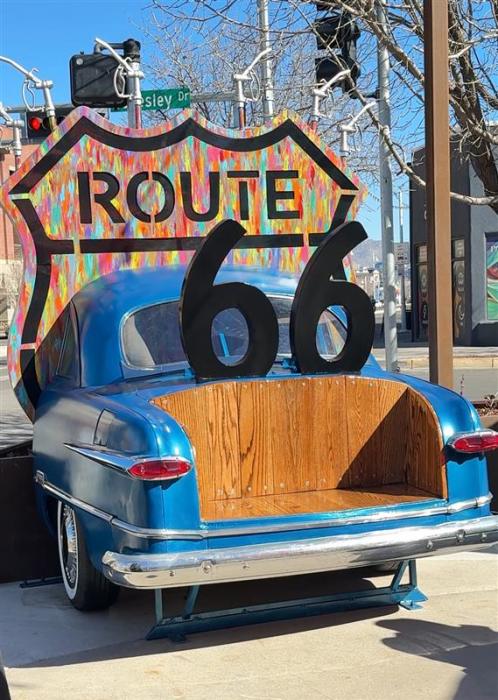
Kings and queens of the road — park it at M’tucci’s Bar Roma in the former Jones Motor Company (est. 1939) to sit in the Route 66 Throne. Nazario Sandoval (also known as Wemfer) created this public artwork for Route 66 Remixed, an “art-fueled road trip” activating 18 miles of Albuquerque’s Route 66 as an open-air art gallery with augmented reality, murals and installations.
Formerly a Sleepy Bear TraveLodge from the 1950s, Hotel Zazz raised the bar with a polychrome makeover dreamed up by owner Sharmin Dharas and her daughter and a hi-fi hideaway speakeasy. For Sharmin, Zazz is personal as much as it’s historic: she grew up in its hallways when her parents owned the TraveLodge, learning to bike and swim on its grounds. Read more about Sharmin’s incredible story here.
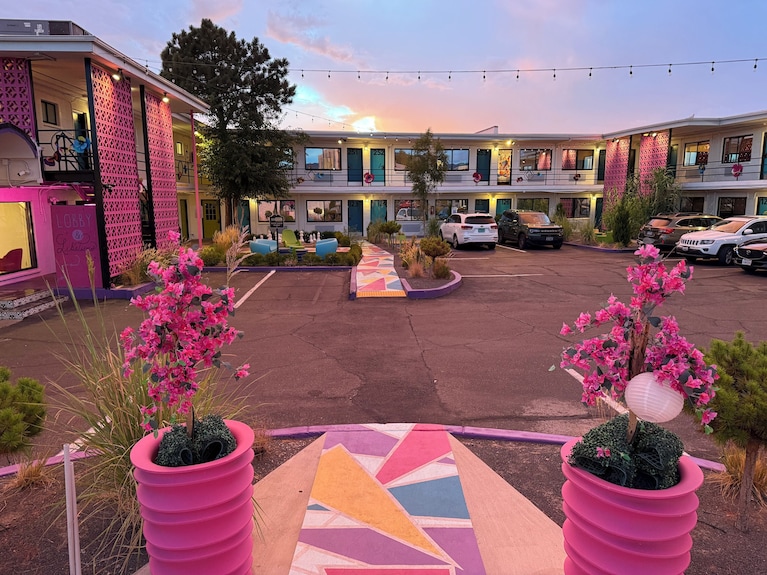
Photo courtesy of Hotel Zazz.
Transport yourself into another world full of “new-stalgia,” a dream you can wake up in.
Designed by artist Howard Meehan and installed in 2016, this immersive bus stop installation was created as part of a call for art from all eight states along Route 66. “Reels and Wheels” pays homage to Route 66, the Hiland Theater's history and Albuquerque's status as a top U.S. filmmaking city with a rich pop culture legacy.
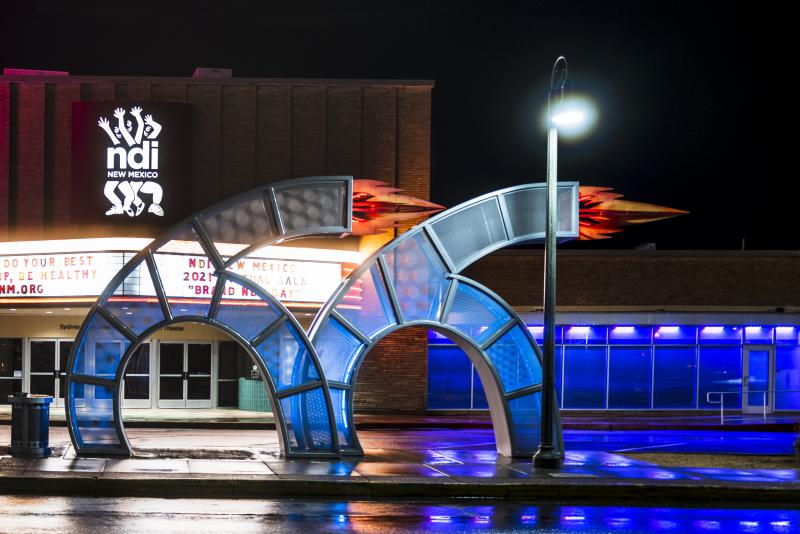
Photo courtesy of the City of Albuquerque.
The Hiland Theater opened in 1950 as the largest movie theater in Albuquerque in its day. The building and its monumental animated green neon sign embodies the transition between Streamline Moderne architecture and the Bauhaus/International Style movement. The latter movement produced influential 20th century artists and designers including Ludwig Mies van der Rohe and Paul Klee.