
SIGN UP
FOR DISCOUNTS, NEWS AND EVENTS BY EMAIL
Visit Albuquerque prohibits users from downloading images from our website.
Please use our media library for downloadable images and usage rights.
Born and raised in Albuquerque, Tim Keller is Albuquerque’s 31st mayor. Previously serving as the state auditor for New Mexico and representing the 17th district in the New Mexico State Senate, Keller became the city’s mayor in 2017.
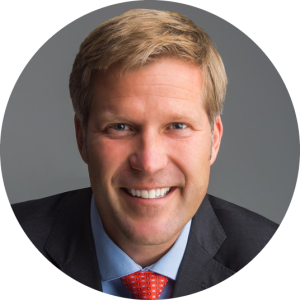
In conversation with Roadrunner editor, Monika Dziamka.
Route 66 is a symbol of movement, freedom and connection. For Albuquerque, it’s always been more than just a road. It represents who we are as a city. We’ve long been a crossroads where cultures meet, stories unfold, and people come together. Route 66 helped put us on the map, and its legacy still shapes our identity today. That’s why the Centennial is such a big deal for us. It’s a chance to reinvest in what makes the corridor special and connect it to the next 100 years. I’ve also lived a stone’s throw from Central in two different spots now for more than 20 years, so it’s also home for me.
That’s a tough one, but I’ve always had a soft spot for Downtown. I grew up going to metal shows at venues along Central, and that stretch really captures the energy of Route 66, the music, movement and history all in one place. Not to mention iconic bars like Anodyne and Sister Bar.
In my younger days growing up here, I also loved some of the bars that are now gone. Blue Jeans especially. My wife and I had date No. 3 there one afternoon. Between the band, lively darts and BBQ—it wasn’t a restaurant; people would just cook their own on the porch grill—it was an awesome afternoon.
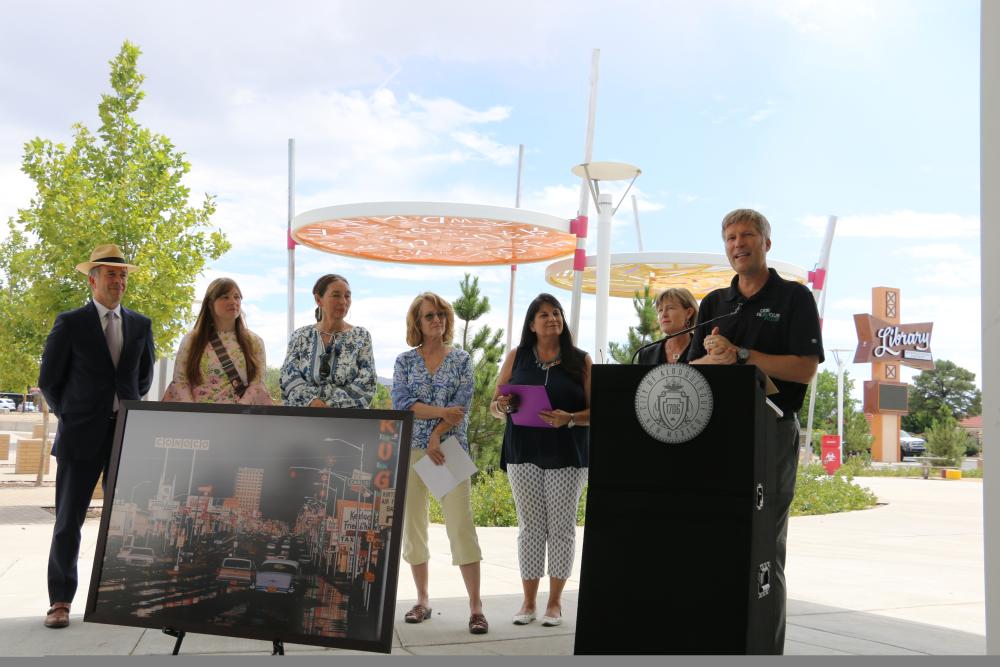
Another spot that really stands out is where The Caravan used to be. My parents used to dance there, and now that same site is home to the International District Library. It even kept some of the original wood floors from The Caravan. That library is now part of a new wave of public investments we’re making along the corridor, including public art, safer streets and community spaces that honor our history while serving future generations.
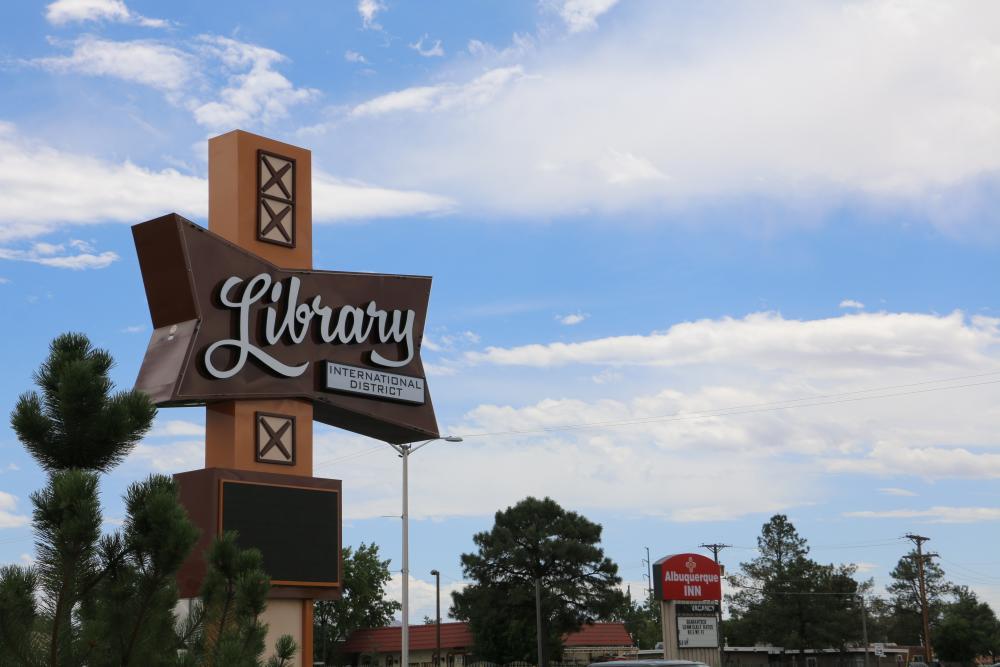
The International District Library sign, repurposed from the Caravan East Nightclub sign (formerly the Crescendo Club, c. 1961) on Route 66.
One memory that stands out for me is cruising Central as a teenager. Like a lot of people who grew up here, it felt like a rite of passage once you got your driver’s license or your first car. Driving to what were then tape and record stores was my favorite weekend afternoon pastime during high school and college. It wasn’t just about driving. It was about tapping into the energy of the city. The cars, the music, the food stops, the sense of freedom. You really felt like you were part of something. That’s when I started to understand how much Route 66 means to Albuquerque. It has always been more than a road. That spirit is still alive, and we’re working hard to preserve it through everything from historic sign restorations to augmented reality murals and Centennial events that bring people back together on Central.
There’s so much creativity tied to Route 66 in Albuquerque. From the neon signs that light up Central to the murals that tell the stories of our neighborhoods. The flaming exhaust pipe bus stop at the old Highland Theater has to be the coolest bus stop on Route 66.
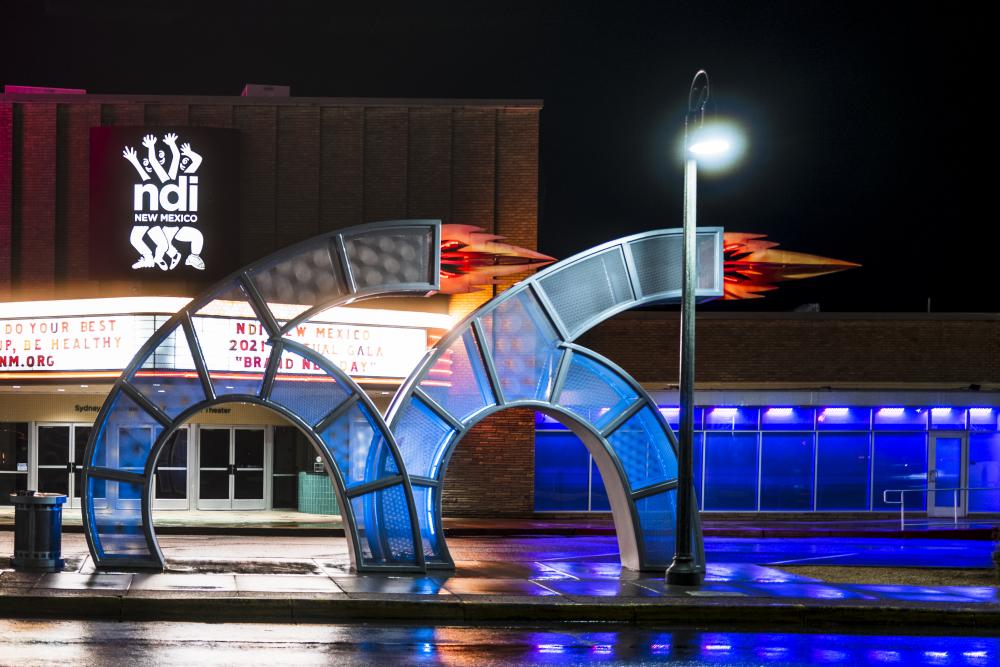
Reels and Hot Wheels bus stop installation in Highland Business, Nob Hill, by artist Howard Meehan. Photo courtesy of the City of Albuquerque.
The dozens of murals, some front and center, some tucked away, touch on so much of our city’s beauty, tension and resilience. I also think the neon signs themselves are artwork. Just a vibrant sign of an era in many ways gone by, but now also coming back, brighter and longer lasting.
Soon a giant neon tumbleweed in memory of legendary architect Antoine Predock will crown the Route 66 Rail intersection. That site also marks the nexus of the city’s new Rail Trail, a pedestrian parkway and seven-mile loop that tells the city’s story of us, the people and place that have called this crossroads in the high desert home for thousands of years.
We’re seeing that creative energy come to life in new ways as part of the Centennial with interactive murals, digital storytelling and events that lift up our local talent. Events like Route 66 Summerfest also bring that creativity into the streets. You can see it in the music, the art and the way people come together to celebrate. That mix of culture and community is what makes Route 66 so meaningful here.
My wish is that Route 66 keeps growing as a place that brings people together. As we celebrate the Centennial and continue investing in the corridor, I hope we bring even more energy, creativity and opportunity to the communities along Central.
That means supporting local businesses, creating spaces for artists and entrepreneurs, and making sure the area stays affordable for the people who live and work there. From new housing and storefront improvements to transit upgrades and public events, we’re making sure the next century of Route 66 is just as impactful as the last.
If we stay focused on culture, connection and quality of life, Route 66 will continue to be a driving force in shaping Albuquerque’s future.