
SIGN UP
FOR ROUTE 66 UPDATES, NEWS AND EVENTS BY EMAIL
Visit Albuquerque prohibits users from downloading images from our website.
Please use our media library for downloadable images and usage rights.
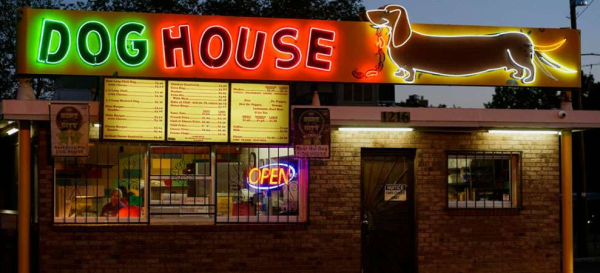
The Dog House Drive In sign.
Neon, in essence, is a fluorescent colored chemical, which when strung along in a glass tube can form an illuminated image or word. Elemental neon is reddish orange on its own, changing to blue, yellow, or pink with the addition of other elements. The first functional neon sign was unveiled in Paris by French scientist Georges Claude in 1910.
In 1924, New York City’s Times Square switched on its first neon sign. Neon arrived in New Mexico soon after, just in time for the booming autotourism industry spurred by the new highway system. Albuquerque’s Central Avenue (Route 66) boasts plenty of spectacular illuminated signs on its 18-mile stretch. Neon provided the route with a playful and vibrant energy that inspired artists, writers, and musicians who made their way along the Mother Road.
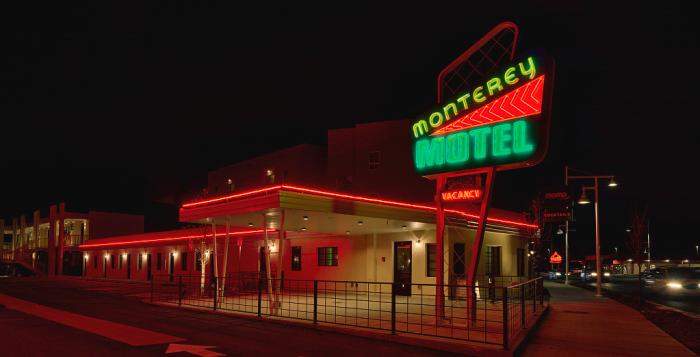
Carol M. Highsmith, Monterey Motel, 2020, digital photograph. Photo courtesy of the Library of Congress Prints and Photographs Division, Carol M. Highsmith Archive. LC-DIG-highsm-66032
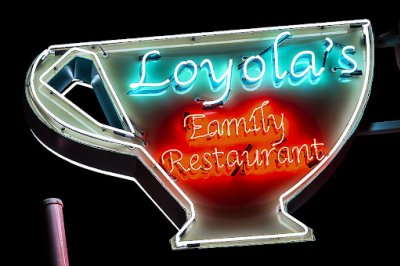
Neon sign at Loyola's Family Restaurant in east Nob Hill.
Neon signs visually annotated the cultural landscape of the area, using light, color and design to appeal to visitors. The signs and the businesses they represented riffed on elements of the regional landscape and the cultures, histories and mythologies of New Mexico and the greater Southwest: El Vado Motel (referencing the site along the Rio Grande where Spanish settlers forded across the river to form Old Town); Tewa Motor Lodge (referencing the Tewa-speaking Pueblo communities of New Mexico); De Anza Motor Lodge (referencing the Spanish conquistador Juan Bautista de Anza, who was the governor of colonial Nuevo México and California); the Franciscan Hotel (referencing the Franciscan monks who settled along the conquistadores in colonial Nuevo Mexico), and many more. Overnight stays were far from scarce in Route 66’s heyday, so moteliers expanded their roadside presence with flashier, more detailed signs. If the elaborate displays weren’t enough, there was always one last resort—advertising the day’s most advanced amenities: refrigerated air and color television.
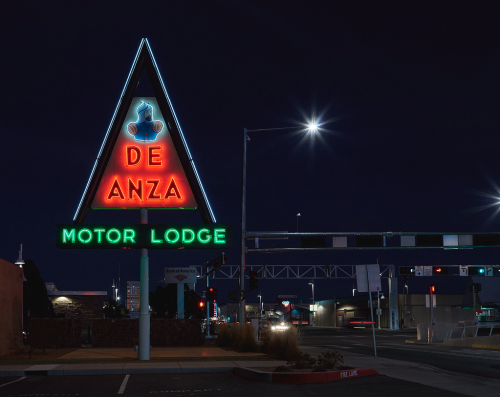
De Anza Motor Lodge's triangular neon sign in east Nob Hill.
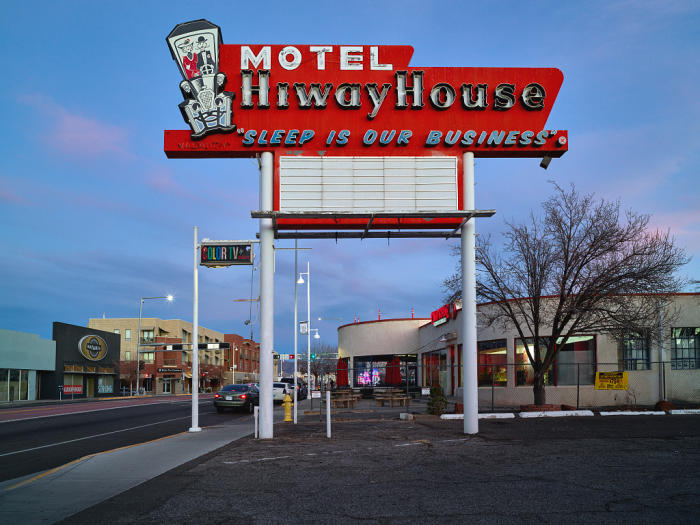
The sign for the former HiWay House Motel in Nob Hill. Note the "Color TV" advertisement.
Carol M. Highsmith, Sign for the Hiway House motel, 2020, digital photograph. Library of Congress Prints and Photographs Division, Carol M. Highsmith Archive. LC-DIG-highsm-66014
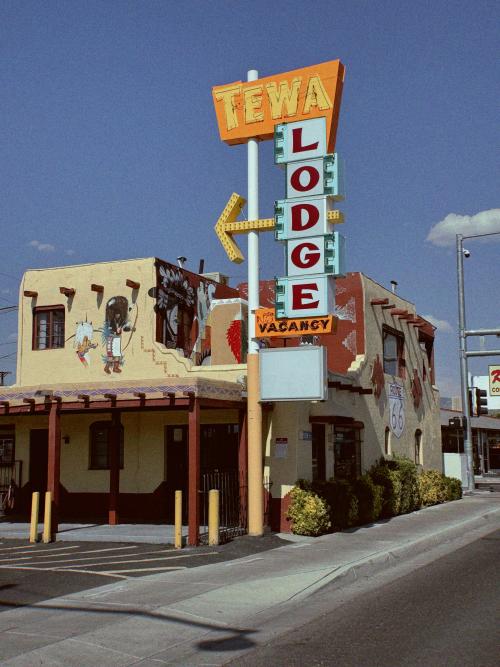
Tewa Motor Lodge after sign restoration, 2025. Photo courtesy of Merch Motel.
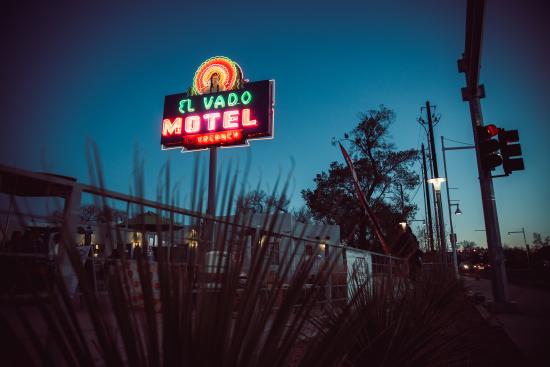
El Vado Motel's sign lit up at dusk.
A city ordinance in 1974 restricted the height, size and luminescence of Albuquerque’s monumental, midcentury signs. Some signs, such as the Trade Winds Motel, were cut to fit new size restrictions on Central Avenue. This policy was met with much public scrutiny, so the ordinance was later amended to allow existing neon signs to stay if they met 25% of the restrictions. Interest in Albuquerque’s neon continued well into the 2010s, when UNM art professor Ellen Babcock formed Friends of the Orphan Signs as a way to artistically reimagine abandoned commercial signage as open-air exhibition spaces. In 2023, the City of Albuquerque instituted Revamp Route 66 to return the remaining neon of Central Avenue back to its original glory.
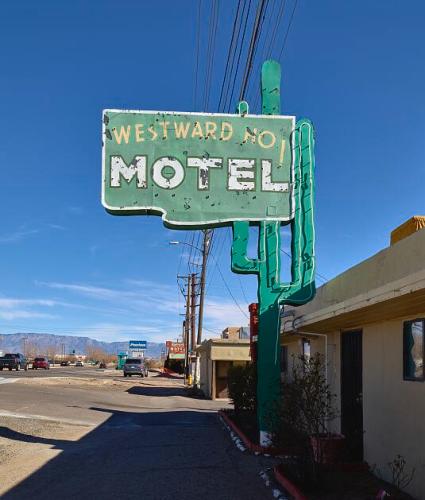
Westward Ho! Motel, one of the recipients of the Revamp Route 66 grant.
With these community efforts, many of the original neon signs from Route 66’s heyday are still in place, or preserved and displayed by the Garcia Automotive Group at the West Central Route 66 Visitor Center’s Sign Park. Stroll through history, admiring the desert-baked textures of these monumental relics of midcentury America. At night, watch as they light up the night, almost as bright as the glittering view of Albuquerque.
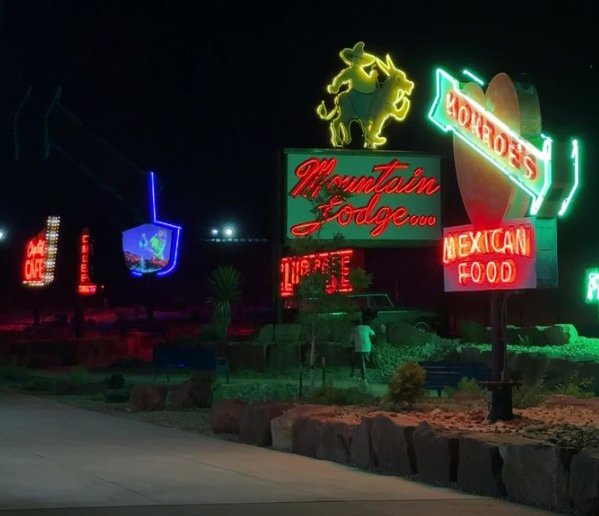
Neon from around New Mexico (including Friends of the Orphan Signs' Revivir in violet light, third from left), at the new Neon Park on Nine Mile Hill.
Watch our tour of some of Albuquerque's iconic Route 66 neon on YouTube.