
SIGN UP
FOR ROUTE 66 UPDATES, NEWS AND EVENTS BY EMAIL
Visit Albuquerque prohibits users from downloading images from our website.
Please use our media library for downloadable images and usage rights.

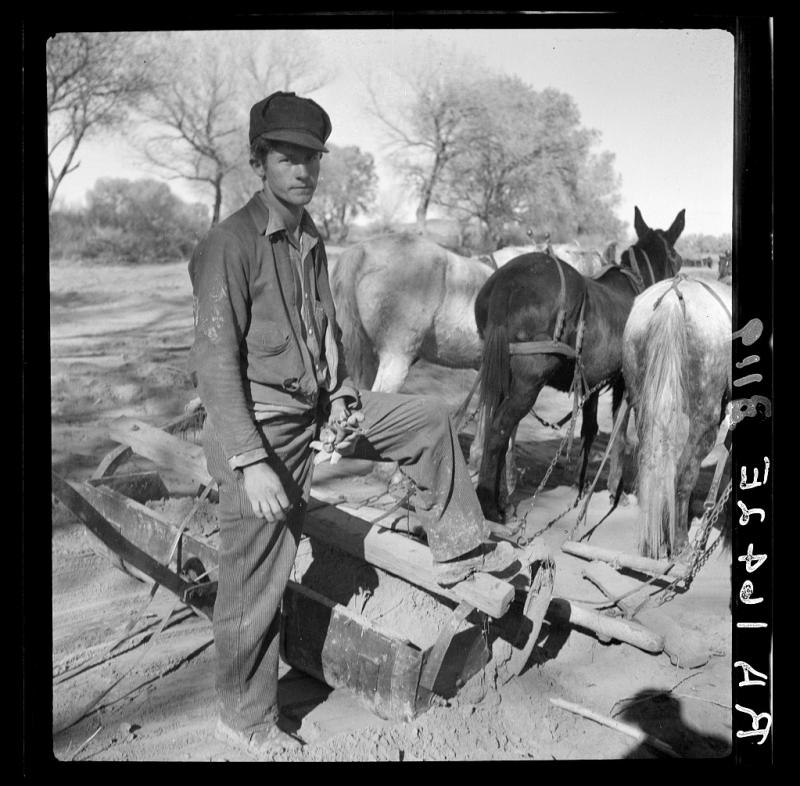
Dorothea Lange, A New Start, Bosque Farms Project [South of Albuquerque, near Isleta Pueblo], December 1935, black and white film negative. U.S. Farm Security Administration/Office of War Information Black & White Photographs. LC-USF34-001642-E
Before Route 66 was a neon playground, it was a lifeline for farmers escaping the Dust Bowl throughout the southern Great Plains. Long before they were nationally-acclaimed photographers, Dorothea Lange, John Collier Jr. and Russell Lee were recruited by the federal government to document rural life during the Great Depression. Without realizing it, these stylish photographs would become iconic images of the early 20th-century American West and New Mexico, influencing American photography onwards.
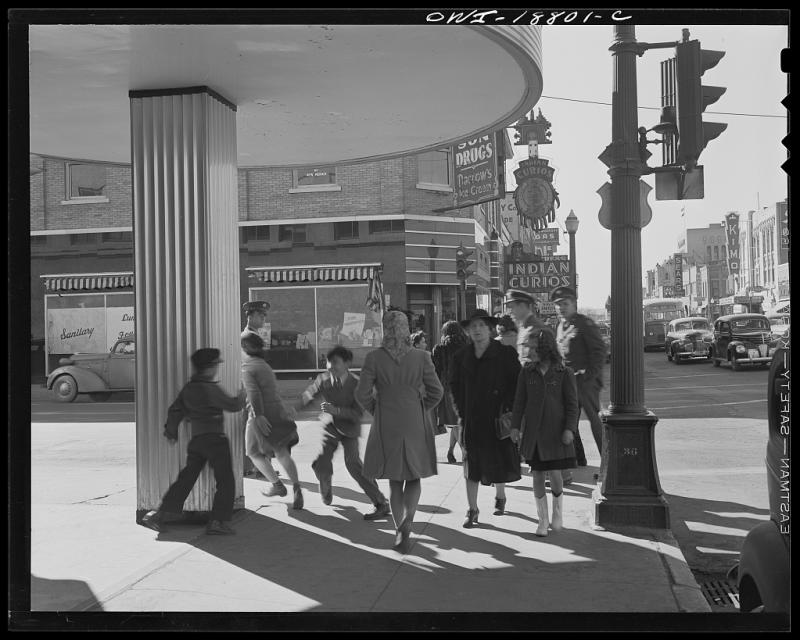
John Collier Jr. Albuquerque, NM [Downtown], c. 1944, black and white negative. U.S. Farm Security Administration/Office of War Information Black & White Photographs, Library of Congress. LC-USW3-018801-C
After World War II, the leisurely American road trip was born. Families packed into convertibles to “go West,” sending photo postcards back home to show off these desert destinations.
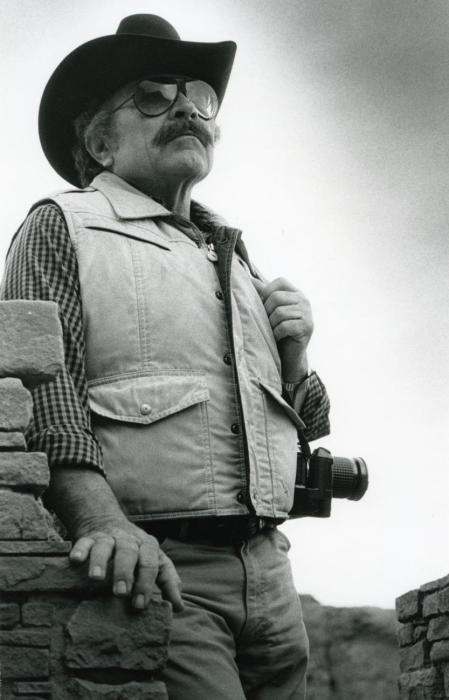
Portrait of Lee Marmon, circa 1990. Photographer unknown. Courtesy of Center for Southwest Research and Special Collections, University of New Mexico.
Right here in New Mexico, a young boy from Laguna Pueblo named Leland “Lee” Marmon heard an automobile accident outside his front door. Brownie camera in tow, Marmon went to capture the scene. This shot launched Marmon’s journey as a photo documentarian, specifically of the people and lifestyles in his native Laguna. His body of work continues to inform scholars of 20th-century life and memory in Laguna Pueblo in the wake of autotourism.
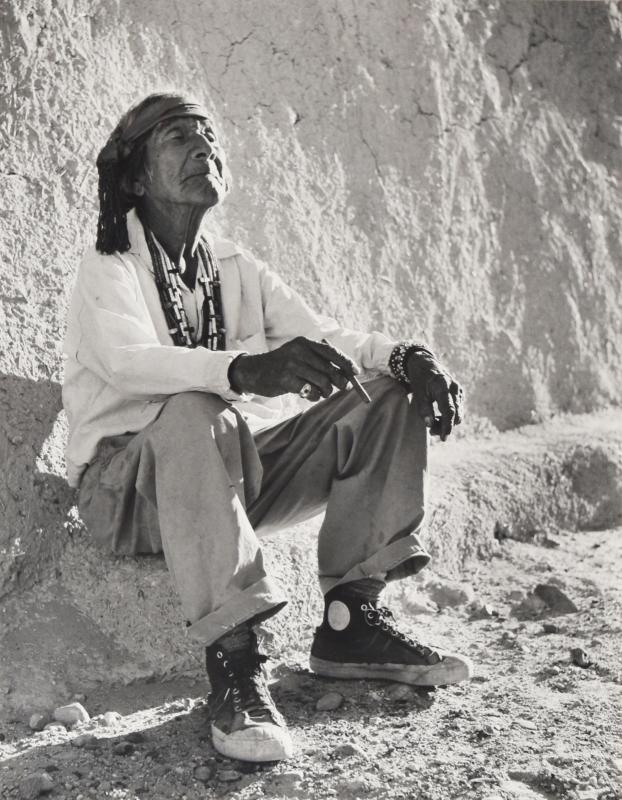
Lee Marmon, White Man’s Moccasins [Old Man Jeff], 1954, gelatin silver print, Albuquerque Museum, gift of Cate Stetson, PC2021.72.28.
By the early 1970s, Route 66 was slowly sinking into a decline after a new interstate system was established in 1956. What were once considered the mundane and sometimes amusing sights along the American roadside were coming into focus for architectural critics like Robert Venturi, Denise Scott-Brown and John Margolies. Seeing the onset of a homogenized American roadside, Margolies urgently took to the road. Of over 11,000 photographs taken from the 1970s to 2000s, Albuquerque’s Route 66 was a recurring character in all of its flux. Margolies remarked on his work, “I didn’t want to be ahead of my time. I want to be in sync with it.”
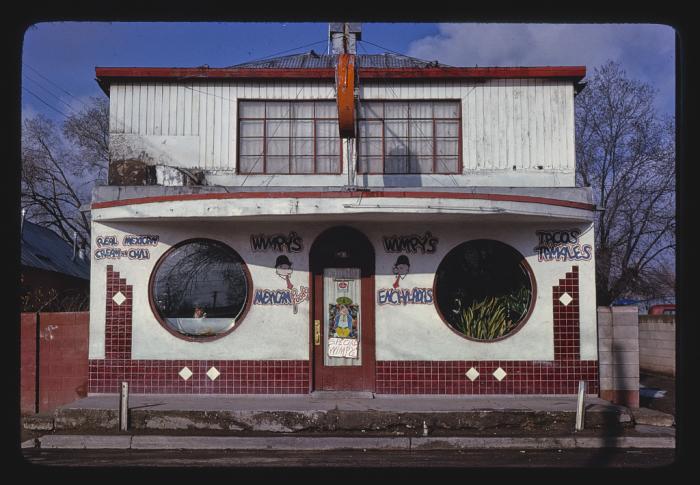
John Margolies, Red Ball Cafe, 4th Street, Albuquerque, NM, 35mm color photograph, c. 1979. John Margolies Roadside America photograph archive (1972-2008), Library of Congress, Prints and Photographs Division.
Today, the story of Albuquerque’s 18-mile stretch of Route 66 is being reframed by the people who live it. Two of Albuquerque’s rising stars on the scene pull from the methods of Norteño photographer Miguel Gandert’s 1980s lowrider portraits and Lee Marmon’s indigenous lens: Nathaniel Tetsuro Paolinelli and Jessica Roybal. Both photographers work within the city’s rich lowrider subculture in the Barelas and Downtown neighborhoods.
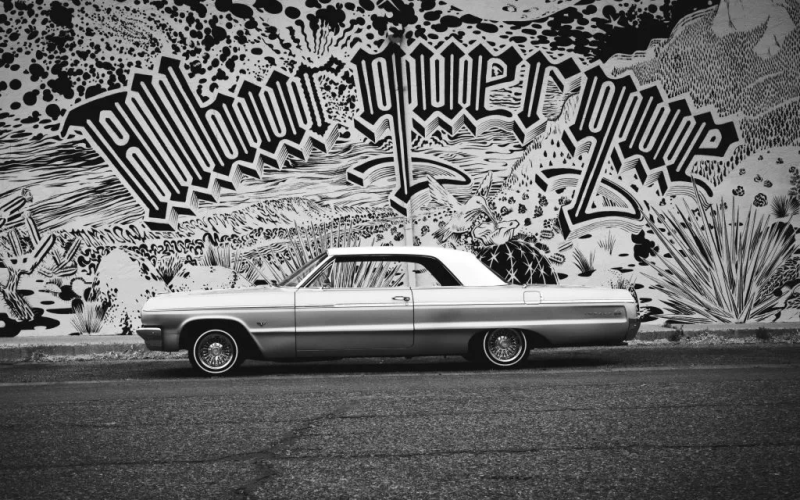
Jessica "Jesree" Roybal. A black-and-white photo of a 1964 Chevy Impala set against the backdrop of a popular mural by Larry Bob Phillips in Albuquerque featuring large, bold graphics and icons representative of southwestern scenery. Photo courtesy of Jessica Roybal and Authentically Albuquerque.
Paolinelli’s photos are usually paired with a name and story, as told by his subject, wherein the storyteller’s autonomy is prioritized. The highway is not treated as a relic of the past. Instead, these artists are grounded by their communities, keeping the real names and stories of the people who make Central Avenue distinctive – stewarding their memory for the next generation of Route 66 cruisers. In Spring 2026, the City of Albuquerque Arts & Culture Department platformed lowrider culture in two Route 66 exhibitions free to the public. Paolinelli and Roybal are joined by photojournalist Gabriela Campos in the West Central Route 66 Visitor Center’s inaugural exhibition, “Centennial Roots,” on view through October 2026. If you find yourself at the Albuquerque Convention Center, walk over to Civic Plaza’s open-air art gallery. The exhibition, titled “Sunday on Central Avenue,” showcases Route 66 photography by Paolinelli, Roybal and Campos alongside poetry by Damien Flores and Levi Romero, blending visual storytelling with the written word.
“The Other Route 66” features captivating photographs and archival objects from the route that document the city’s changing landscape and culture over time. The exhibit is on view at the Albuquerque Museum through January 3, 2027.