
SIGN UP
FOR ROUTE 66 UPDATES, NEWS AND EVENTS BY EMAIL
Visit Albuquerque prohibits users from downloading images from our website.
Please use our media library for downloadable images and usage rights.
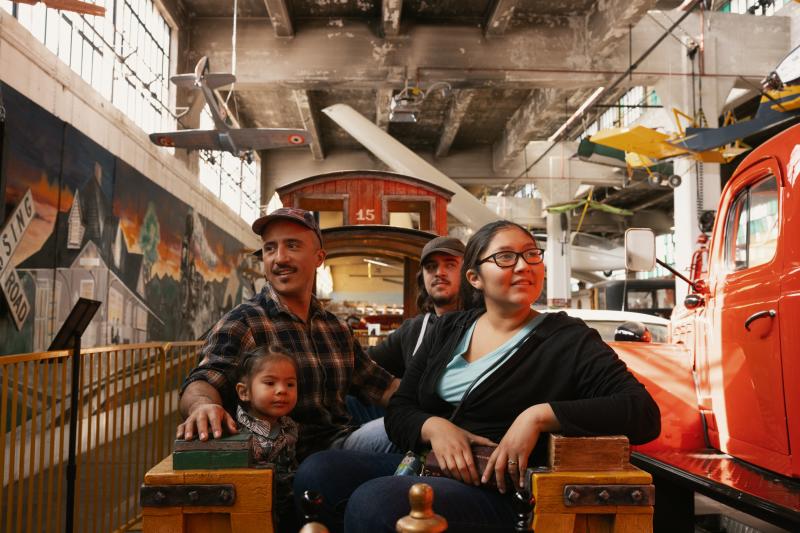
A family enjoys the display at the Wheels Museum. Photo courtesy of NMTD.
Before our sun-baked stretches of Route 66 became synonymous with adventure and connection throughout the Southwest, the railroad played a critical role in shaping Albuquerque into what it is today. In the late 19th century, as the nation pushed westward, iron rails became the arteries of economic life, bringing people, goods, ideas, and change faster than ever before. When car culture and Route 66 arrived in the 20th century, the rhythms of rail and road intertwined to further define our city’s growth and spirit.
Albuquerque was formally founded in 1706, but it took nearly 200 years before the railroad reached us with the arrival of the Atchison, Topeka and Santa Fe Railway (AT&SF) in 1880. Surveyors chose a crossing along the Rio Grande roughly two miles east of the original plaza (which we know as Old Town), prompting the creation of “New Town” near the tracks. Merchants and residents followed quickly, moving closer to the promise of rail-related commerce. The railroad station, which expanded to the Alvarado Hotel in 1902, became the city’s new heart, stimulating growth and attracting investment. Some of the original structures from those buildings remain in downtown Albuquerque today, at First Street and Central Avenue.
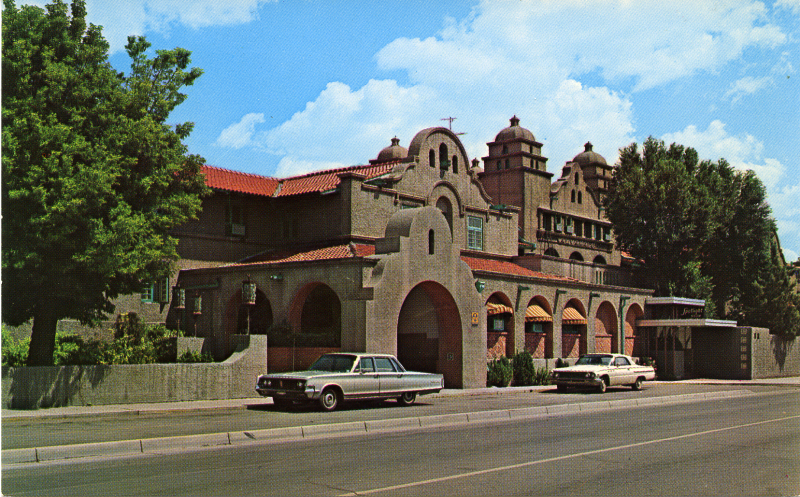
Alvarado Hotel, ca. 1965, ink on cardstock. Albuquerque Museum, gift of Nancy Tucker. PA2014.007.635.
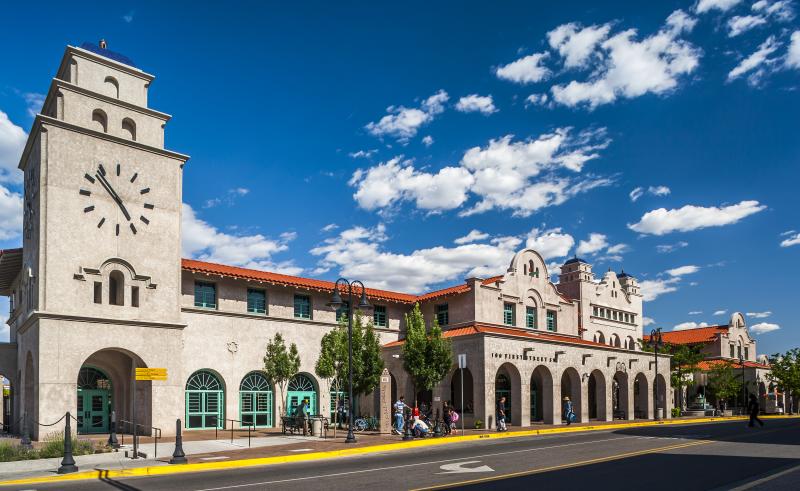
Alvarado Transportation Center today. This train and bus depot was fashioned to look like the original Alvarado Hotel.
The AT&SF line linked Albuquerque to the rest of the country, radically reshaping the economy. Freight cars carried wool, cattle, local produce and more to distant markets, while passenger trains brought new faces and opportunities. Albuquerque grew into a bustling regional hub. The distinctive red-and-yellow colors of the locomotives, the train whistles at dawn and dusk, and the constant motion at the rail yards were woven into local life. Today, that industrial center is home to our beloved Rail Yards Market, a film production center and the Wheels Museum.
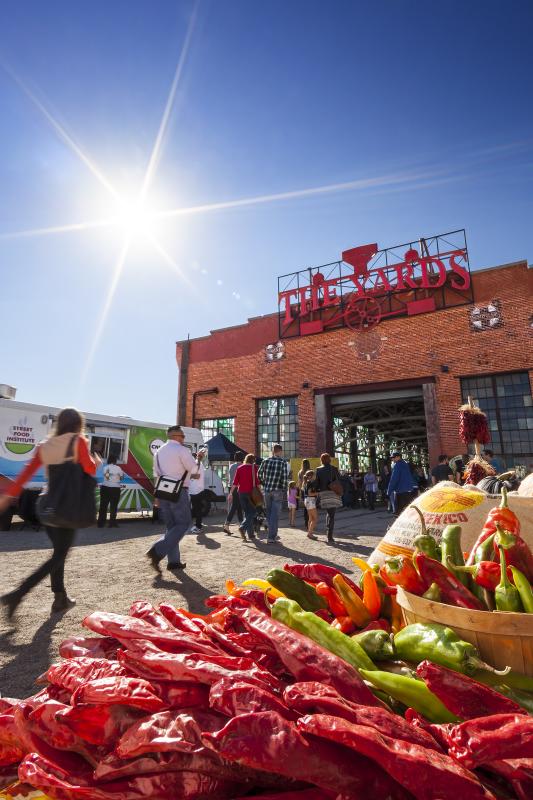
The Rail Yards Market.
In 1926, Route 66 changed the way Americans traveled. In Albuquerque, Route 66 followed existing local roads that ran alongside the railroad tracks, moving east and west through the city and linking travelers heading coast-to-coast. This alignment wasn’t a coincidence: it mirrored the same geography that had guided the development of the railroad — flat, direct, efficient.
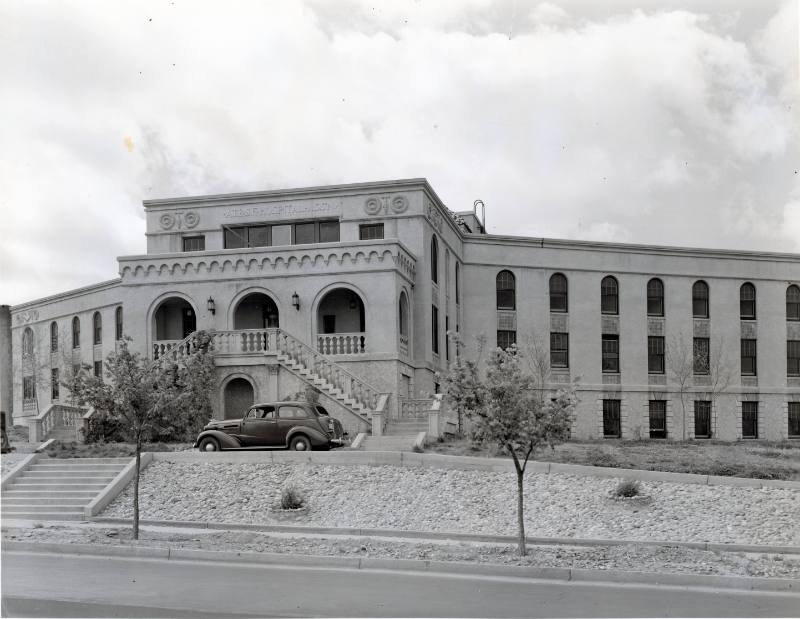
Photograph of Santa Fe Railroad Hospital [Hotel Parq Central, 806 Central Avenue] circa 1935. Albuquerque Museum, gift of John Airy. PA1982.181.423.
Route 66 and the railroad existed side by side, each serving different but complementary roles. Where trains brought goods and longer-distance passengers, Route 66 ushered in the age of the automobile, inviting families, adventurers and road-trippers to explore the American Southwest at their own pace. Motels, diners, service stations and quirky roadside attractions sprang up along Central Avenue, driving city expansion toward the mountains. With the clang of the trains meeting the hum of car engines, Albuquerque became a perfect stop along the Mother Road.
Though rail service declined mid-century, many of the old rail lines still serve as transport for goods, and people can buy tickets at the Alvarado Transportation Center to commute by train across the country. In 2023, New Mexico Heritage Rail, a 501(c)(3), all-volunteer organization, helped restore the Santa Fe 2926 steam locomotive so that it could once again run on local railroad tracks during the inaugural New Mexico Railroad Days event. Today, visitors can ride the Rio Metro Rail Runner when entering or departing Albuquerque; in 2026, the Rail Runner shares its 20th birthday with Route 66’s centennial.
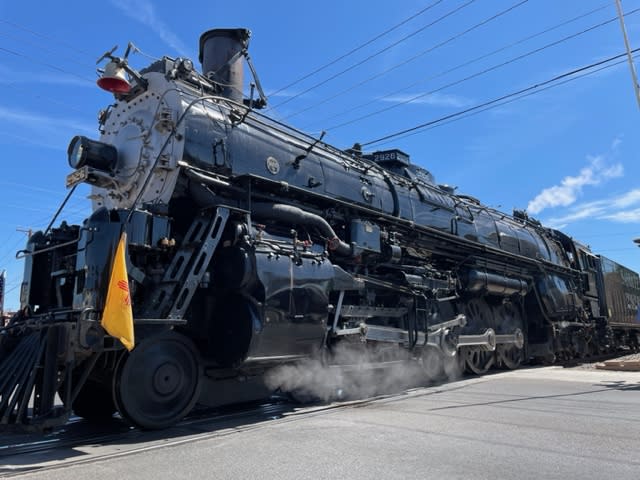
AT&SF 2926 Heritage Rail blowing steam.
Meanwhile, Central Avenue’s Route 66 heritage lives on in neon signs, preservation projects and annual events celebrating the road and its stories. And this April 18 and 19, to celebrate the legacy of both the railroad and Route 66, the Wheels Museum will host the Route 66 Roads & Rails Festival at the Albuquerque Rail Yards. This free, family-friendly event will feature local vendors, live music, historians, all sorts of transportation enthusiasts, and more, from 10 a.m. until 4 p.m. each day.
In many ways, Albuquerque’s evolution reflects broader American transitions: from steam to gasoline, from local outpost to international destination. Albuquerque still stands where tracks and trails converge, reminding us that transportation does more than move people and freight — it shapes cities, connects cultures, and keeps history rolling forward.
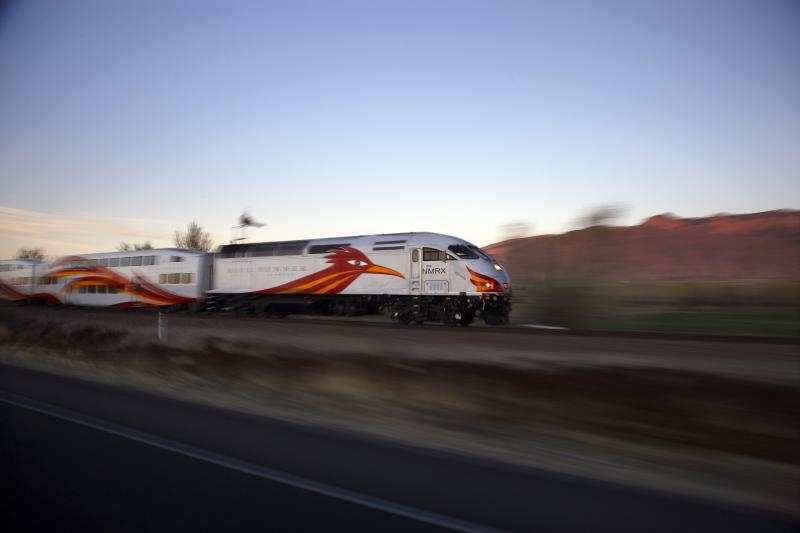
The Rio Metro Rail Runner.
Want to know more about the history of the railroad in Albuquerque? Check out:
Overhaul: A Social History of the Albuquerque Locomotive Repair Shops
By Richard Flint
UNM Press, 2021