
SIGN UP
FOR ROUTE 66 UPDATES, NEWS AND EVENTS BY EMAIL
Visit Albuquerque prohibits users from downloading images from our website.
Please use our media library for downloadable images and usage rights.
Peter B. Dedek is a professor of history and the coordinator of the Public History Program at Texas State University, San Marcos. He is the author of Hip to the Trip: A Cultural History of Route 66, which was first published in 2007 by UNM Press. A revised edition of Hip to the Trip has just been published in celebration of the centennial.
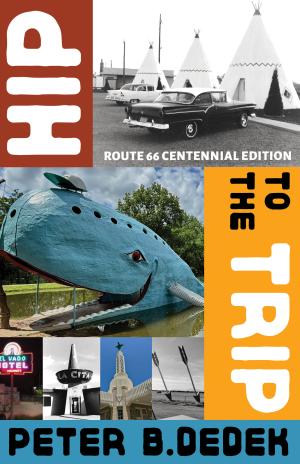
The cover of Dedek's Hip to the Trip (Centennial Edition). Photo courtesy of UNM Press, Albuquerque, NM.
In conversation with writer and "Roadrunner" editor, Monika Dziamka.
I did my dissertation on Route 66, which then became the first edition of Hip to the Trip: A Cultural History of Route 66. Route 66 has consistently been a part of my research agenda and academic career. I’ve traveled Route 66 from end to end twice, in 1998 and in 2024, going slowly and spending a lot of time talking to people and staying in old motels. What drew me to Route 66 for my dissertation in the first place was an article I read about it. I realized I really wanted to study its popular culture as well as its history. That corridor was used by Native Americans for thousands of years because it’s really the most efficient route through the Southwest. Then, when we had European settlement, you got roads, and then the railroads came through, and then the highways were built — they all basically follow that same corridor.
What’s also significant to me and to a lot of people is Route 66 as a symbol. It’s not just a symbol of transportation and development of the United States and Western migration. It also is a symbol of car culture and freedom, of this idea that you can just get up and go!
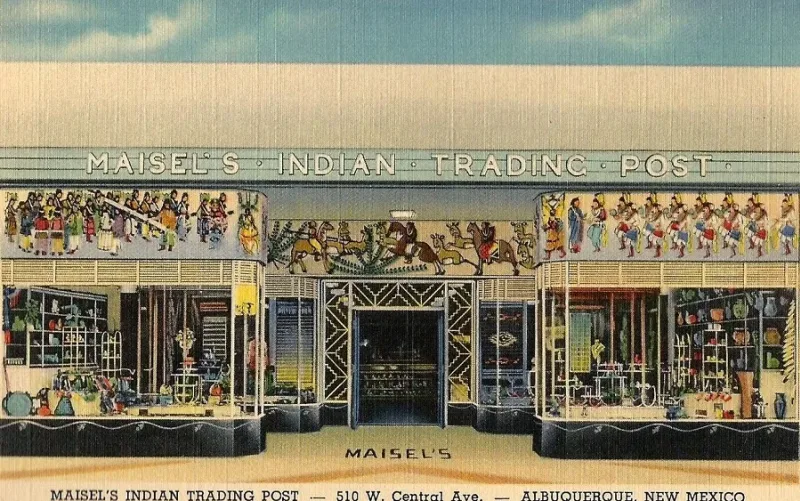
Postcard, Skip Maisel's Indian Trading Post, ca. 1950s.
One place is Skip Maisel’s Indian Jewelry & Crafts, which sadly doesn’t exist anymore.* The façade of the building, which was built in the 1930s, is still intact. It was this higher-end souvenir and gift shop with genuine turquoise, and every time I walked in there, it was like going back in time. Another place I like is The Monterey Motel. It’s been restored in a way that still really preserves the way it was back in the 1950s. The original sign is still there!
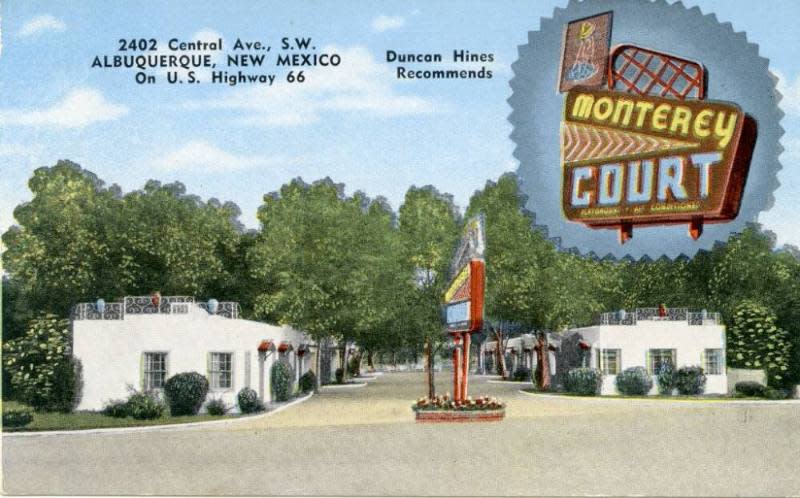
Postcard, Monterey Motel, c. 1950. Albuquerque Museum, gift of Nancy Tucker. PA2014.007.326
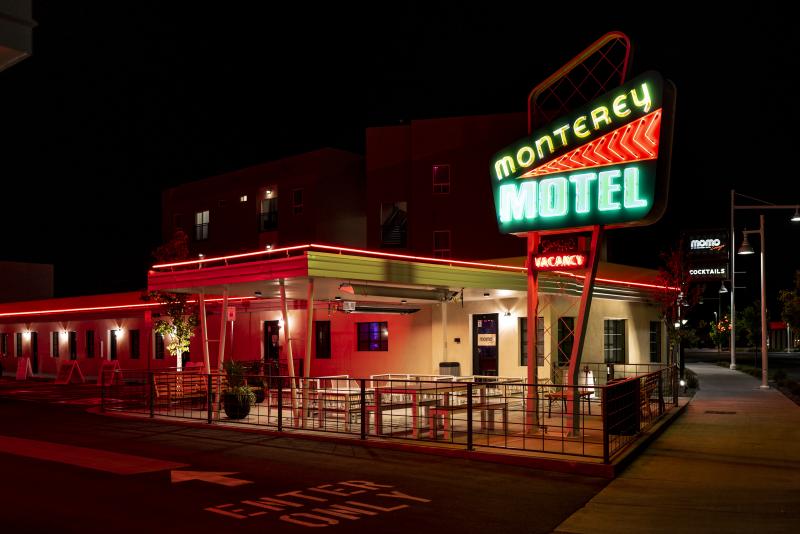
The Monterey Motel (2402 Central Ave SW) today. Photo courtesy of Marble Street Studio.
*Editor's Note: A contemporary art gallery, Pleased to Present, is scheduled to open in the original Skip Maisel's building in Spring 2026. Pleased to Present is a 2025/2026 grantee of the Visit Albuquerque Tourism Grant Program. The historic Santa Fe Indian School murals on the building's facade can still be viewed from the street. Learn more about Native American art history at this iconic Downtown location here.
There’s this old station east of Holbrook, Arizona called Dotch Windsor’s Painted Desert Trading Post that was built in 1940. It survived for a while; then eventually, when it was bypassed by the highway, it went out of business and fell into disrepair. The first time I traveled Route 66, I didn’t even know it was there. But the second time, I learned about it from this nonprofit group called the Route 66 Co-op. They went in and actually stabilized this whole building and repaired it to the point where it looks like it did when it was still in use.
In order to get there, you’ve got to go off of the old Route 66 and down this dirt road for several miles in the desert, and then you come to a locked gate. You have to call this number on the gate, which was hard because I barely got any reception out there, and this person picked up. And I’m like, “Well, I’m at the gate for the trading post.” They’re like, “Oh, yeah, okay, here’s the combination.” So then you use the combination, you open the gate, and you turn left, and you go down this road, and then the gate shuts behind you, and there’s, like, this sort of almost paranoid feeling of, I’m in the middle of nowhere! Then you drive and eventually come to this little jewel, just hidden in this barren, desert landscape. Now it’s painted white and has some old gas pumps that they returned to the site, and it’s just you and the wind blowing, and you know, it creates this sense of almost like being a ghost. To see this place, it really gives you a sense of what some of these more remote parts were like in early Route 66 history. It was a very memorable experience because you can’t help but wonder, “Why did they restore this?” I’m sure not many people are actually going to go to all that trouble to see it. But I think that’s part of what made it so special. It was something that you feel you discovered, right? It’s not something presented, something that gets thrown in your face. It’s something you have to go out and find.
The experiences I’ve had that have been the most meaningful have been when I’m interviewing people. A lot of Route 66 enthusiasts will tell you, it isn’t necessarily the places—it’s really the people you meet there, how people who live and work along Route 66 over the decades have made such strong communities. They would know of each other! I’d talk to someone in Illinois, and they’d be like, “Oh, well, you know, down in Albuquerque, there’s so-and-so.”
My wish is that we can save as much as possible of what’s left of it, and that it’s saved in a way that not only preserves the architecture of it, but that it preserves the spirit too. It’s not just some marketing tool — it’s this actual, historic place that people really care about! It’s still got these places where you can have these authentic experiences to get a feel for what Route 66 was like in its heyday, a time that predated corporate America. Everything is so standardized and monotonous now.
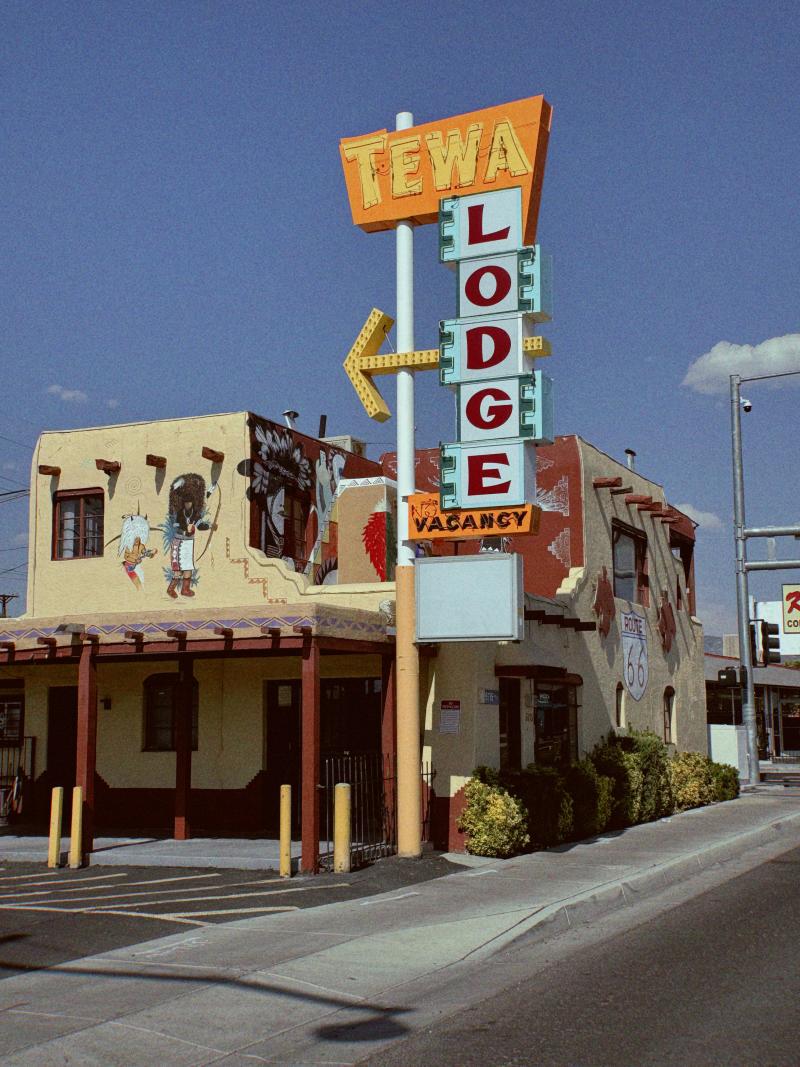
The Tewa Lodge on Albuquerque's Route 66. Photo courtesy of Barkev Msrlyan / Merch Motel.
We need that quirkiness, that personal touch. Route 66 should be historic above all else.