
SIGN UP
FOR ROUTE 66 UPDATES, NEWS AND EVENTS BY EMAIL
Visit Albuquerque prohibits users from downloading images from our website.
Please use our media library for downloadable images and usage rights.
Nathaniel Testuro Paolinelli is an Albuquerque-based documentary photographer whose work, though often in black and white, vibrantly captures the complexities of life in New Mexico and around the world. Of Japanese and Italian heritage, Paolinelli recently published his book Seventh and Central: Lowriders (University of New Mexico Press, 2026), which he calls a “community-centered portrait of Albuquerque’s lowrider culture, shaped by family, friendship, craftsmanship, and pride.” For more information about the book, as well as for details about a book signing and photography panel event on Aug. 16 at the Albuquerque Museum, visit www.unmpress.com.
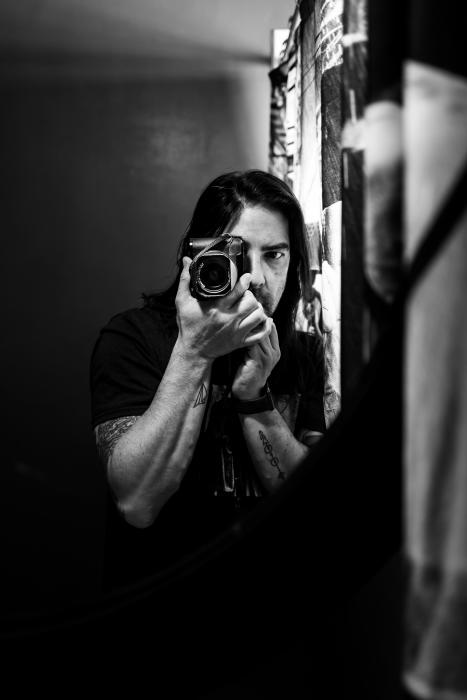
As told to Monika Dziamka, co-editor of The Roadrunner.
Route 66 is a huge part of my life, personally and professionally. It is the road that brought me to New Mexico when I was nine months old. The first home I lived in was one block from Central Avenue (Route 66), and even though I’ve traveled all over the world, I’ve never lived more than a couple miles from Route 66.
I grew up on Central. My mom had a futon shop there, and I spent my childhood in the back of that store, riding bikes and skateboards up and down the sidewalks. Later, so much of my photography started happening on that same road. So for me, Route 66 is not just a historic highway or some nostalgic idea. It is part of my actual life. It is a line running straight through my childhood, my city and my work.
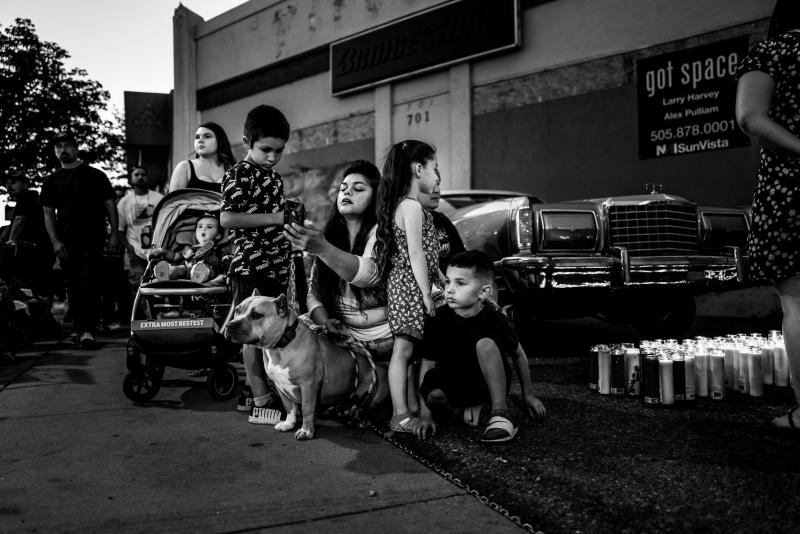
Woman takes photo in front of a lowrider with children and a dog. Photo courtesy of Nathaniel Tetsuro Paolinelli.
That’s hard because I have so many places along Albuquerque’s stretch of Route 66 that mean something to me. But if I had to pick one, I’d probably say downtown Albuquerque.
As a photographer of people, Downtown is one of the best places in the city. You get the old buildings, the street life, the lowriders, the light, the characters, the history, and all the strange little moments that make Albuquerque feel like Albuquerque. It’s not always polished, but that’s what I like about it. It feels alive.
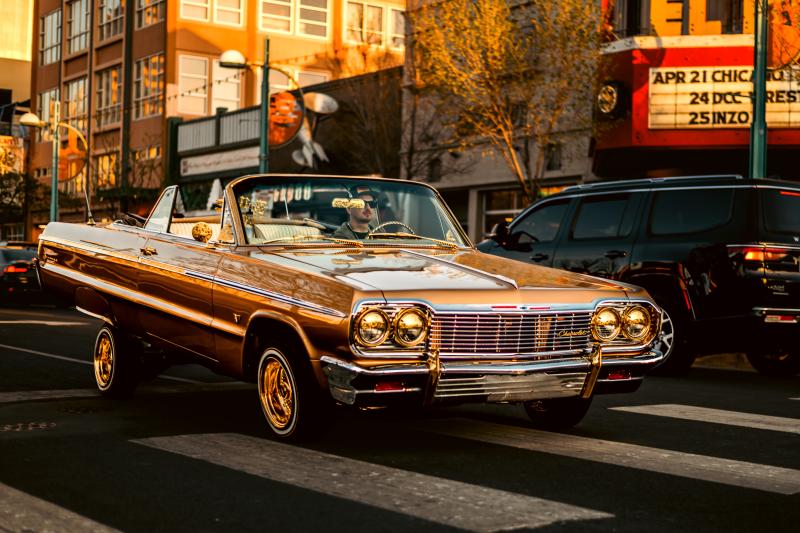
Lowrider on Central Ave (Route 66) in Downtown Albuquerque. Photo courtesy of Nathaniel Tetsuro Paolinelli.
I have a lifetime of memories on Route 66. It’s where I ate my first burger and fries at the Frontier. It’s where I rode around as a kid, where I hung out as a teenager, and where I learned a lot about the city just by being out in it.
One memory that always sticks with me is being 15 and going through the back door of a tattoo shop on Central to get tattooed. I probably shouldn’t have been doing that, but that’s also part of growing up on Central. You saw everything. You met all kinds of people. You got an education you couldn’t get anywhere else.
In 2018, I took my camera Downtown to Seventh Street and Central. I knew lowriders cruised and parked around there, so I showed up one Sunday in the summer. That was the beginning, but it was slow. I only went a few times at first. In 2021, I really started showing up, and everything changed.
It was never a project or a job. It was just me showing up, talking to people, making pictures, and slowly building trust. After a few years, I made a small zine called Seventh and Central. The name came from the intersection where I first entered the world of lowriding, and where I spent so much time photographing. That zine eventually grew into the book published by University of New Mexico Press.
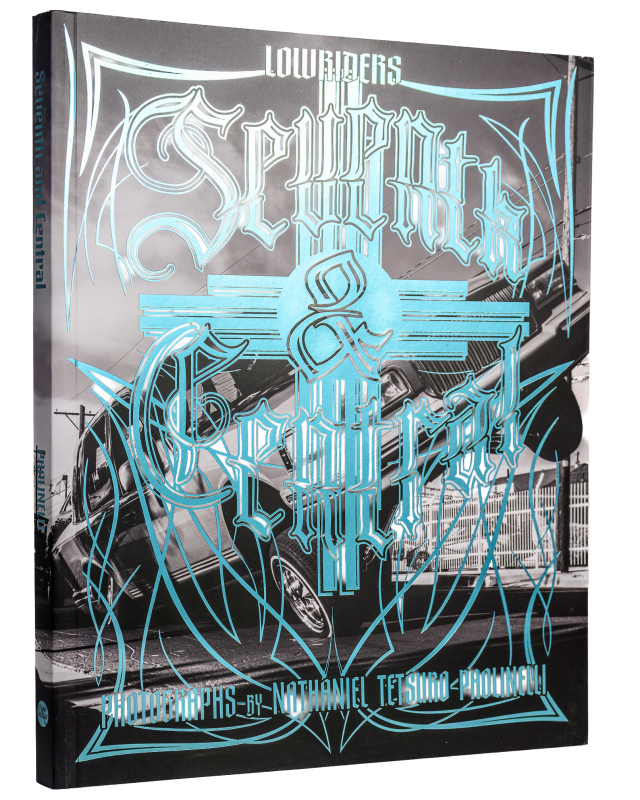
Seventh & Central front cover. Photo courtesy of Nathaniel Tetsuro Paolinelli and UNM Press.
The real research was time. It was hanging out at cruises, standing around in parking lots, being invited into homes, and listening to people talk about their cars, their families, their clubs, their histories, and what lowriding means to them. A lot of what matters most never fully fits into a book. The conversations, the friendships, the quiet moments before or after a photograph – those things are everything to me. They are what keep me moving forward.
What I gained from making this book is bigger than the book itself. I gained friends. I was welcomed into a community with deep roots in New Mexico, a culture built on family, craftsmanship, pride, style and respect. Lowriders are rolling works of art, but the heart of the culture is the people. That is what I wanted the book to show.
My birthday wish for Albuquerque’s stretch of Route 66 is that we remember what this road is supposed to be. It is a road for movement, cruising, gathering and connection.
I’d love to see Central feel more open again. I’d love to see the ART bus lanes rethought or removed so Route 66 can breathe a little more, and so people can once again experience that feeling of an open road running through the heart of Albuquerque.
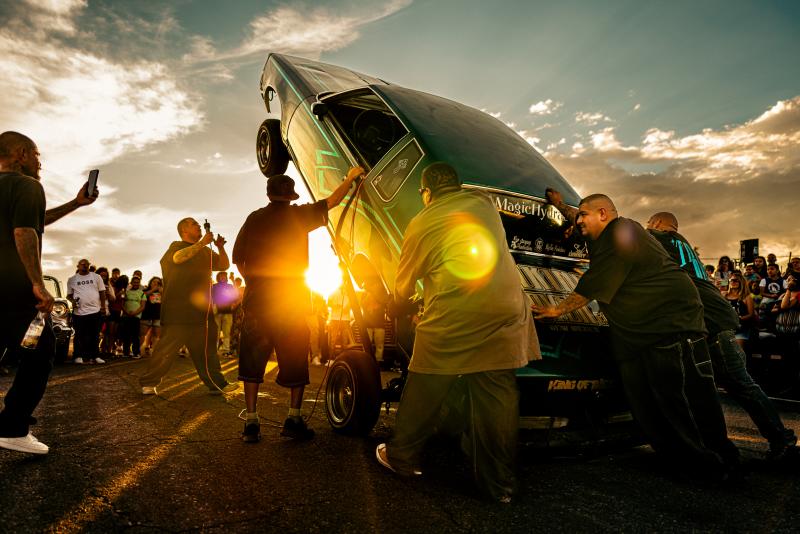
Lowrider hopping. Photo courtesy of Nathaniel Tetsuro Paolinelli.
Albuquerque and Route 66 are inseparable to me. Central Avenue is not just a street through the city. It holds so many layers of Albuquerque’s history, from old motels and neon signs to restaurants, small businesses, car culture, families, artists, and people just trying to make a life here.
A lot of my work comes from paying attention to those layers. I’m interested in the people who give a place its soul. Route 66 has always been a road people pass through, but for those of us from Albuquerque, it is also a place we come from. That’s what makes it powerful to me.
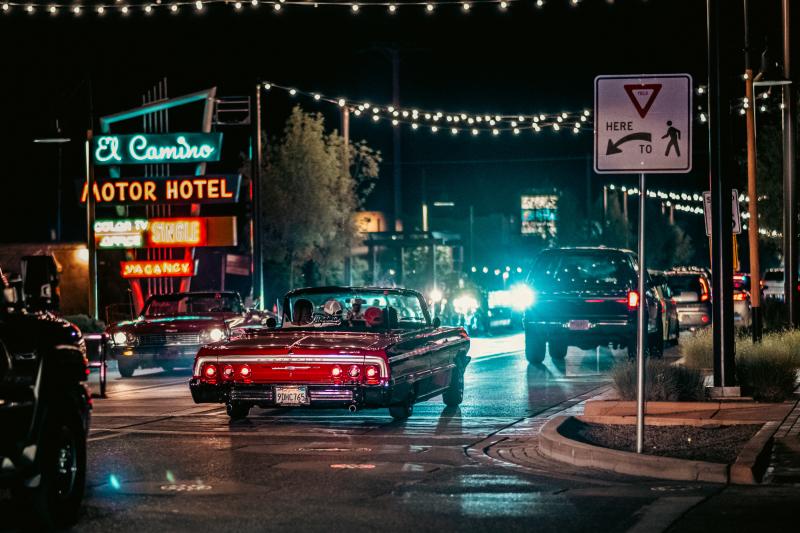
Lowrider cruising 4th Street (pre-1937 Route 66). Photo courtesy of Nathaniel Tetsuro Paolinelli.