
SIGN UP
FOR ROUTE 66 UPDATES, NEWS AND EVENTS BY EMAIL
Visit Albuquerque prohibits users from downloading images from our website.
Please use our media library for downloadable images and usage rights.
One brisk November day in 1926, after months of correspondence, negotiation and revisions, the American Association of State Highway Officials finalized the U.S. Numbered Highway System — a series of interstate roads that traced through the continental United States. One little highway from Chicago to L.A. was little more than dust and gravel, except for the parts that comprised “heritage highways,” such as the Old Santa Fe Trail, the National Old Trails Road and Beale’s Wagon Road, to name a few close to home. November 11, 1926, became the day that birthed hundreds of highways, with one troublesome child — U.S. 66.
U.S. 66 was a little different than her siblings. She was the only highway designated with a double-digit number ending in something other than “0” or “5.” This was caused in part by her doting parents in Oklahoma and Missouri, who insisted she was too good to be relegated to “U.S. 60 North” (as originally proposed) or “U.S. 62” (making her feel like a second thought). In the Spring of 1926, Oklahoma Highway Commissioner John M. Page sent a telegram, desperate to resolve the semantic debate: “Sixty-six?” Rhythmic, doubled, and pleasing to the eye, the dissenting committee members from Oklahoma and Missouri approved, and the rest is history.
Today, the old highway “Route 66” is shrouded in legend and myth. The mythmaking really began in the 1930s, during the Great Depression, when the road carried families in their ramshackle jalopies from the Dust Bowl of the Midwest to the sunny Southwest and California Coast, in search of fertile land to start over upon. American author John Steinbeck immortalized the highway and its symbolic power as a transient site of transformation and redefinition when he coined it “the Mother Road” in his 1936 novel, The Grapes of Wrath.
Once an artery that connected two great cities of the American West, bringing booms of tourism and workforce to remote outposts of the burgeoning Southwest, Route 66’s neon lights and colorful main streets were a product of an optimistic postwar America. Route 66’s golden age was powered by America’s love of the automobile and the draw of the open road. But as cars got faster and could travel longer distances without stopping for gasoline, travelers began demanding more efficient ways to get from city to city.

By the mid-1950s, interstate highways began replacing large sections of Route 66, bypassing many of the small towns along the original Mother Road. When it was decommissioned in 1985, abandoned by federal dollars for maintenance, it was those same small communities that rallied behind Route 66 to keep it rolling. We can thank our neighbors in Kingman, Arizona, for forming the first Route 66 Historic Preservation Association in 1987 (New Mexico would be the third state to establish one in 1989).
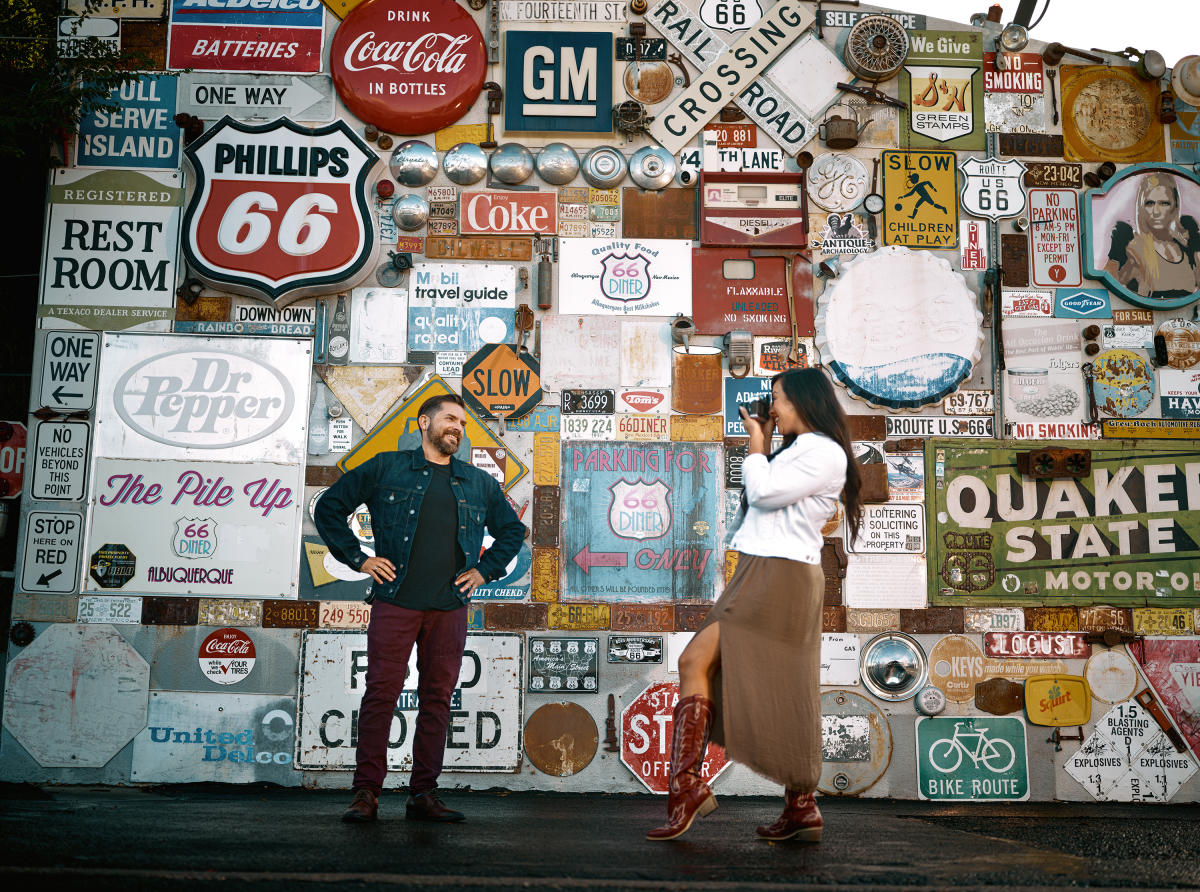
Throughout the 1990s and 2000s, historic preservationists took bold stances to contend that the “homogenous” architecture of midcentury commercial vernacular (including drive-in movie theaters, motels and diners) were, in fact, important to American life. In 1994, Route 66 was marked as a National Scenic Byway, a huge win for its evangelists. This infrastructure, the road itself and its architectural “annotations” along the roadside said something about what “America” was in the midcentury — maybe more so than a Frank Lloyd Wright home or 110-story high-rise — what the people’s priorities were, how they spent their dollars, and what they envisioned the future to look like.
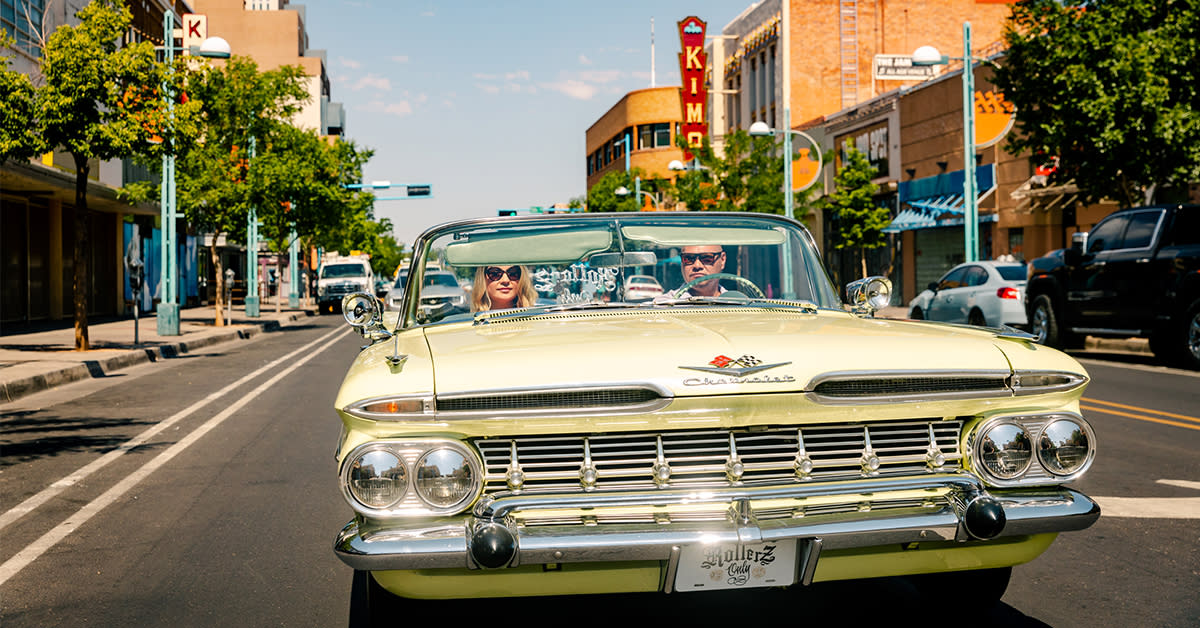
The future is here, right now, today. In 2026, Albuquerque, among our sister 66 cities, celebrated the Mother Road’s legacy in a way that ensured her preservation for another 100 years: revitalized motels, public art activations and storytelling initiatives to keep the engine oiled. In Albuquerque, Route 66 directly reflects the city’s own ebbs and flows. The route historically aided Albuquerque’s exponential growth in the 20th century. One can track the east-west expansion of the city along Central Avenue (Route 66), which now sprawls to an impressive 18 miles from Tijeras Canyon to Nine Mile Hill.
Just a few years ago, the City of Albuquerque recognized that it needed a plan to effectively honor Route 66’s centennial, a once-in-a-lifetime anniversary. Civic investments in historic infrastructure, especially neon signs, set the stage for a renaissance. “New” old motels reopened their doors to the public, and classic eateries received a spotlight of their own. Thus, an award-winning community campaign, in collaboration with Visit Albuquerque, was born: “Route 66: The Trip of a Century,” anchored by a dedicated website, Route66ABQ.com.

Local businesses, big and small, could rock their Route 66 pride in their storefronts, united by a shared visual identity from street banners to stickers, head to toe with real Route 66 Kicks. In addition, the City’s Department of Arts & Culture unveiled Route 66 Remixed in October 2025, which brought together 18 miles, 19 artists and 20 public art projects to tell the multifaceted, evolving story of the Mother Road through artists from different walks of life. Remixed was designed to live on well beyond the Centennial, in both its digital augmented reality activations and the now-iconic murals and sculptures installed along Albuquerque’s Route 66.
The centennial year may end here, on the 100th anniversary of that fateful piece of legislation, but the story is still being written. Route 66 continues to influence decisions around urban planning, public art, entrepreneurship, and how collective histories are told in the towns and cities that grew along it. Even if it continues mostly as a figment of our cultural imagination, Route 66 is a specter over the next 100 years of travel, exchange, hospitality and culture. There were few developments more consequential to the American psyche than the establishment of the federal highway system; it fundamentally altered how we perceive the distances between ourselves and our countrymen hundreds of miles away. Route 66, in particular, provides us common ground to connect through.
Whichever rubber soles you use to trek old 66, on the bottom of your feet or the tires on your cruiser of choice, you follow the footsteps of generations before you. Before “Route 66” and before “El Camino Real,” footpaths were etched into the land by Native American navigators, trading precious goods from as far as the Pacific coast into New Mexico and beyond. Route 66 is an important chapter in this legacy of migration and commerce in the Southwest.
Happy birthday, Route 66. Until we hit the road again. Don’t forget to yield to roadrunners!