It’s not just neon signs that tap into the nostalgic Americana of Route 66. Hand-painted signs that advertised motels, diners and more were found all along the Mother Road. Chad Lindsay from West Hand Signs is continuing the legacy of traditional sign painting in Albuquerque.
Chad has been painting signs for more than 20 years. But before he began painting signs, he pinstriped designs on hot rods and motorcycles.
“The paints and brushes that you use in that world are the same as sign painting, and lettering is a component of that sort of auto culture,” Chad said. “I eventually gravitated more towards lettering.”
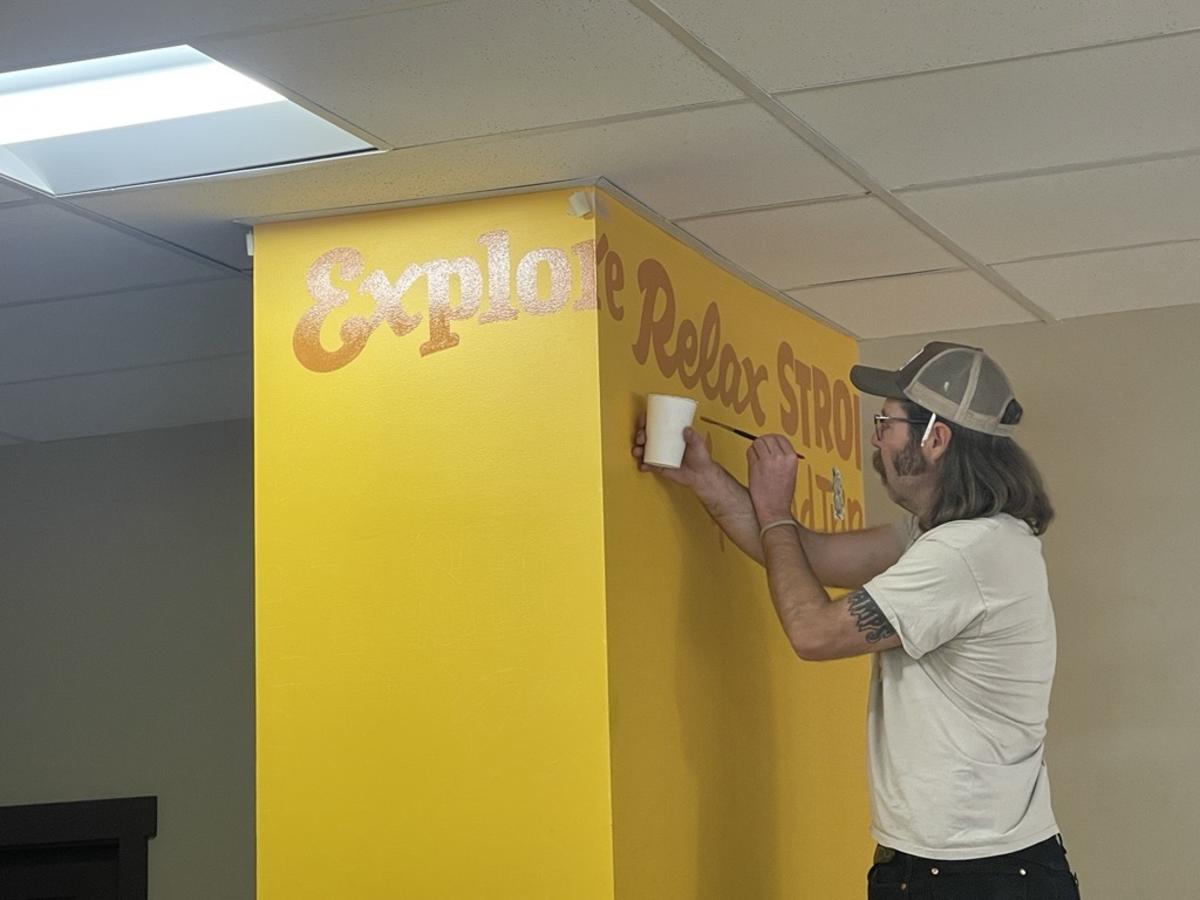
Chad credits growing up in the ’90s with his interest in hand-painted signs. The decade was a period of transition between hand-painted and digitally-generated signs.
“I was probably the first generation that was really excited to realize, ‘Oh, wow, someone painted that by hand and they didn't use tape or stencils or anything,’” Chad said.
Sign painting offers some unique challenges. Whereas other art can be more subjective, anyone who can read will immediately know if a sign isn’t working.
“Your goal is not to impress other gallery artists or a curator. It's for people to not notice the sign as much because they'll notice it more if something's wrong with it,” Chad said. “It's a very enjoyable challenge about being a sign painter.”
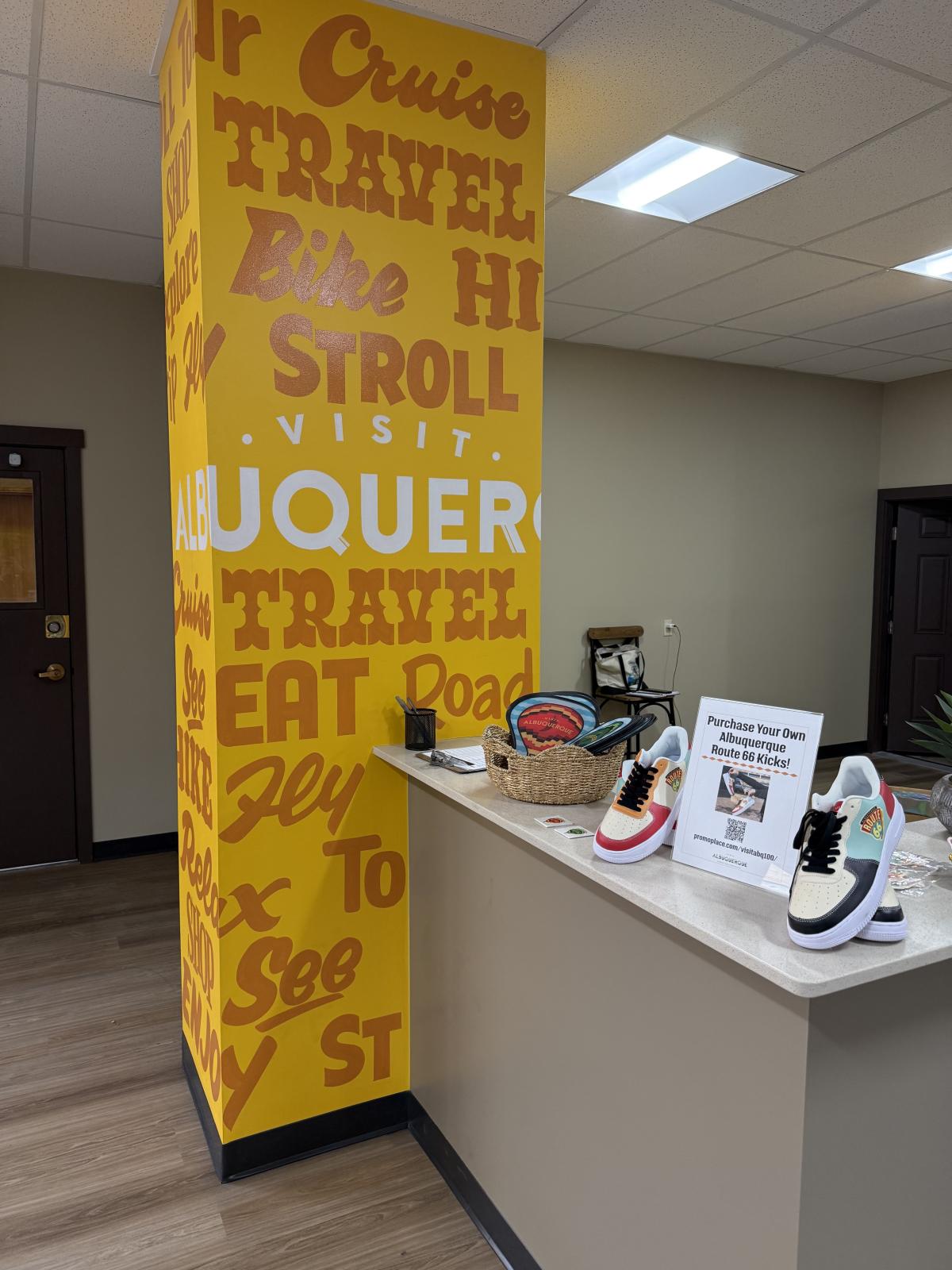
You can spot some of Chad’s work at Visit Albuquerque’s Route 66 Information Station, located at 4th Street and Central Avenue in Downtown. A list of things you can do in Albuquerque encircle two columns at the Information Station that Chad painted in the style of old Route 66 signs.
“I kind of sit around waiting for someone to ask me to do [a project like this] because I love doing this stuff, and I don't always get to work in this era of letter design that is also by far my favorite,” Chad said.
Chad used the meaning of each word to inspire the style of each letter design. Take “eat,” for example.
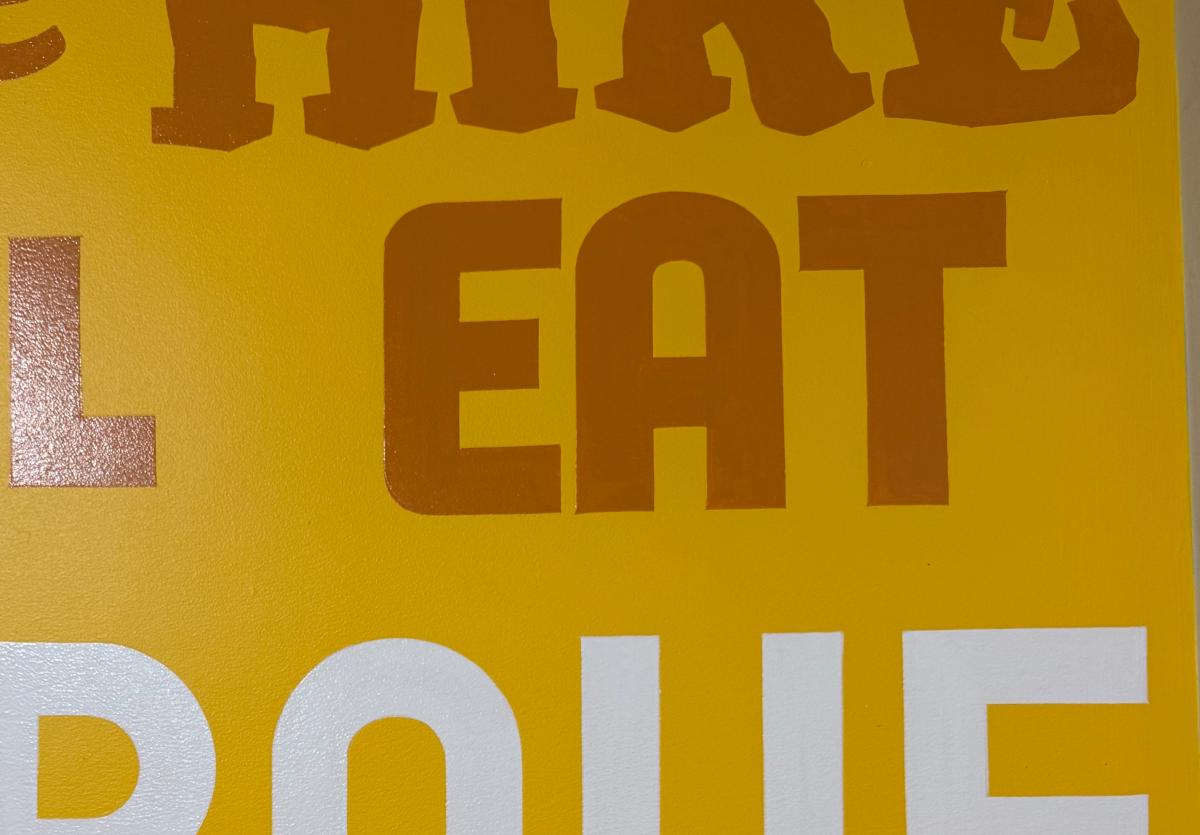
“That's an old style that was really common in the first half of the 20th century,” Chad said. “It's called Gas Pipe because it's got those rounded corners. That’s a very practical letter style that you would see on restaurant signs a lot, and especially homemade restaurant signs.”
Chad’s favorite project that he’s worked on was repainting a sign at El Paisa Taqueria.
“A guy who I never met painted [the sign at El Paisa] years ago, and when I first moved to Albuquerque, it was the first thing I noticed, and it's still my favorite wall piece in Albuquerque,” Chad said.
El Paisa wanted the same piece repainted on a different wall of the business. So, Chad got to pay homage to the original while making it his own.
“I basically got to paint my own version of my favorite sign in Albuquerque. El Paisa is my favorite taqueria around here. So, that was a dream job,” Chad said.
You’ll find multiple signs that Chad has painted along Route 66, and throughout Albuquerque. And, he’s not the only sign painter in Albuquerque.
“There are actually several of us in town,” Chad said. “People always, when they find out I'm a sign painter, they always say, ‘oh, that's a dying art.’ But actually, in this place that has this really rich sign heritage, it's not just me. There are several sign painters here, and we love doing this kind of work.”
@visitalbuquerque Have you been to the Route 66 Crossroad Information Station at the corner of 4th and Central in Downtown Albuquerque? Upon entering, you might notice the hand-painted pillars on each side of the front desk. These were hand-painted by local sign artist Chad Lindsay of West Hand Signs, a member of a robust local sign-painting community in Albuquerque.
♬ indie rock (90) - DJ BAI