
Juneteenth, officially called Juneteenth National Independence Day (also known as Jubilee Day, Freedom Day and Black Independence Day), is celebrated annually on June 19th to commemorate the end of slavery in the United States, as led by brave African American abolitionists and their allies. Some call it our “Second Independence Day.”
The Emancipation Proclamation was signed by President Abraham Lincoln on January 1, 1863, in the throes of the American Civil War. The Emancipation Proclamation changed the legal status of more than 3.5 million enslaved African Americans. Despite the major humanitarian and political success, the effects were not immediate.
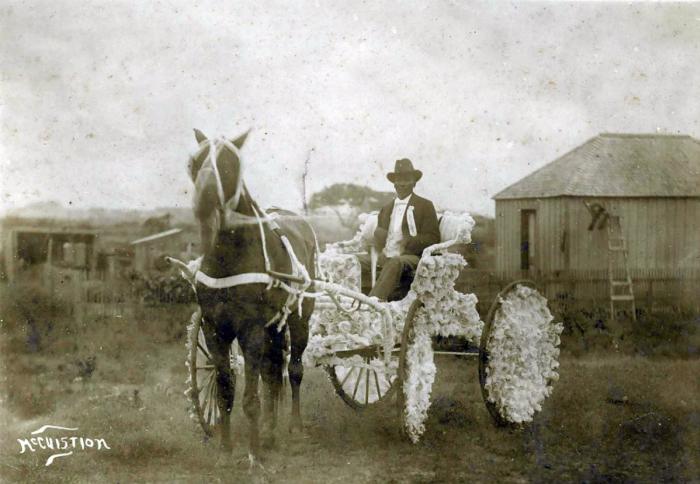
From the UNM Maxwell Museum: Mr. Daniel N. Leathers Sr., in a decorated carriage celebrating Juneteenth, 1913, Corpus Christi, Texas. In the late 18th and early 19th century, carriages were sometimes decorated to celebrate Juneteenth, with their drivers dressed in their best. Photo courtesy of the DeGlover Library, Southern Methodist University.
The news arrived late for the enslaved people of Texas. On June 19, 1865, over two years after the Emancipation Proclamation, 2,000 Union troops arrived at Galveston Bay to announce that 250,000 enslaved Africans in Texas were to be freed by executive decree. A Jubilee was held to celebrate freedom. That is why we recognize and honor June 19th annually, the official date when news of emancipation reached all of the people it impacted.
Juneteenth celebrations date as early as 1866, formed on a local level across various African American churches. The celebrations grew throughout communities of freedmen and women in the South. By the 1920s, Juneteenth would involve food festivals and large cookouts. Some of the earliest recorded mentions of Juneteenth in New Mexico appeared in newspaper publications from the 1890s, then referred to as “Emancipation Day.” In 2021, Juneteenth was recognized as a national holiday on the federal level by the Biden administration.
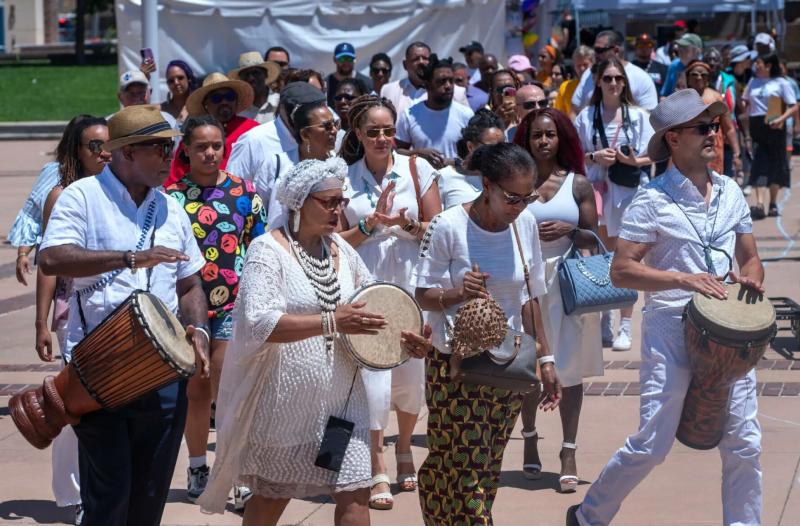
Juneteenth 2024. Photo courtesy of Eddie Moore, Albuquerque Journal.
Celebrate this momentous historical event with the community in Albuquerque this weekend. The following are some free and ticketed things to do during Juneteenth.
Learn more about Reconstruction-era New Mexico and the Black Frontier (specifically the New Mexico freedom colony, Blackdom) at the Maxwell Museum's website and through Dr. Timothy E. Nelson's work.
CNM Juneteenth Backyard BBQ Celebration
Thursday, June 18 | 11 a.m.-2 p.m.
CNM Main Campus (Quad Area), 900 University Blvd. S.E.
Third Thursday: Kick Off Juneteenth Weekend
Thursday, June 18 | 5-8:30 p.m.
Albuquerque Museum, 2000 Mountain Road N.W.
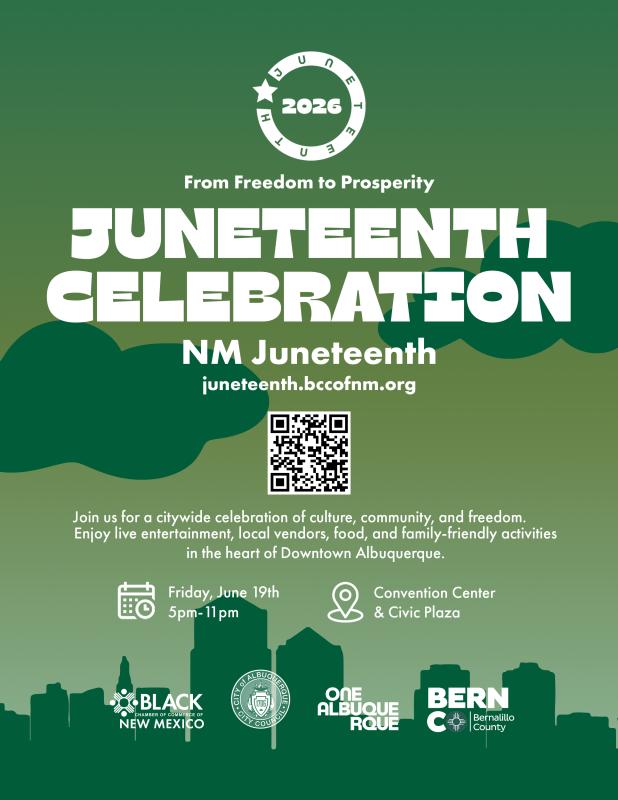
Civic Plaza Juneteenth
Friday, June 19 | 5-11 p.m.
Civic Plaza, 1 Civic Plaza N.W.
For more information, visit www.juneteenth.bccofnm.org.
Juneteenth Celebration at Isotopes Park
(Ticketed event)
Friday, June 19 | 5:30 p.m.
Isotopes Park, 1601 Avenida Cesar Chavez S.E.
Juneteenth Juke Joint
(Ticketed event)
Friday, June 19 | 8 p.m.-1 a.m.
Sister, 407 Central Ave. N.W.
Juneteenth Drag Show at Sidewinders
Friday, June 19 | 8 p.m.-12 a.m.
Sidewinders, 4200 Central Ave. S.E.
Rio Rancho Juneteenth
Saturday, June 20 | 10 a.m.-2 p.m.
Haynes Park, 2006 Grande Blvd. S.E., Rio Rancho, NM
Opening Conversation: The Woods Before Sunrise
Saturday, June 20 | 2-3 p.m.
Albuquerque Museum, 2000 Mountain Rd. N.W.
(Un)bound to Boundless: A Gallery One Juneteenth Exhibition
May 21-July 2 | 10 a.m.-4 p.m.
Gallery One, First Floor of City Hall, 1 Civic Plaza N.W.